


At WP:26, Human Made’s virtual event exploring the future of WordPress, we asked a simple question:
What patterns are shaping the web in 2026?
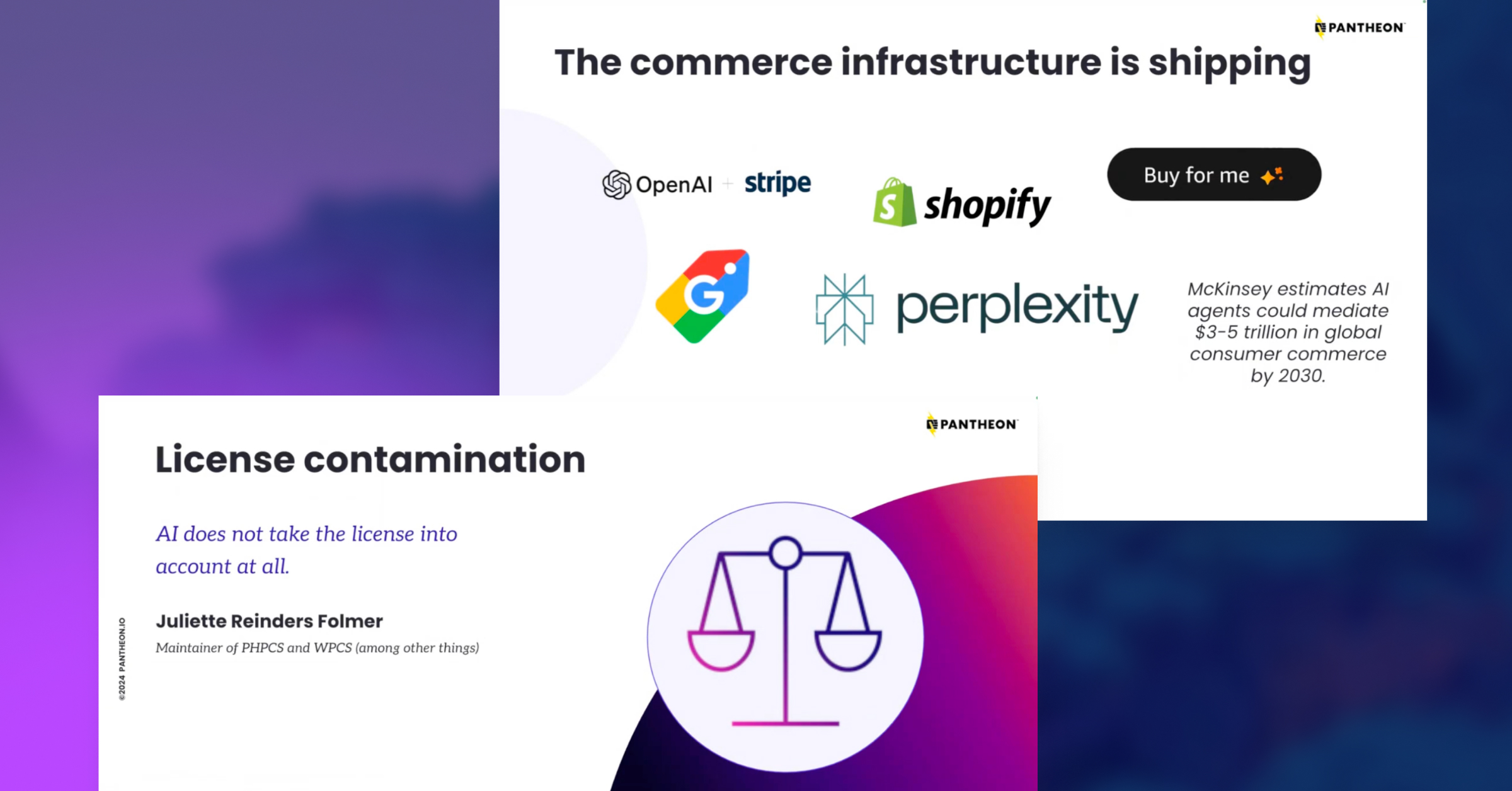
To help answer that, Chris Reynolds, Senior Developer Advocate at Pantheon, stepped back from the day-to-day tooling conversations and looked at the bigger picture.
While many discussions about the future of the web focus on disruption, Chris framed the moment differently.
The web isn’t being replaced. It’s accelerating.
AI is speeding up how teams build and publish. Expectations around digital experiences continue to rise. And organisations are under increasing pressure to deliver faster, smarter, and more resilient platforms.
The question isn’t whether the web is changing. It’s how platforms and teams adapt to keep up.
The web is speeding up
One of the key themes Chris explored was the pace of change.
AI tools are dramatically lowering the friction involved in creating, editing, and shipping digital content. Teams that once spent hours drafting, revising, and formatting can now iterate much faster.
But that speed comes with new challenges.
When publishing cycles accelerate, the surrounding systems also need to keep up. Infrastructure, workflows, governance, and editorial processes all need to scale alongside the tools themselves.
It’s not enough to move quickly. Platforms need to support sustained velocity.
Rising expectations for digital experiences
At the same time, user expectations continue to climb.
Audiences expect fast websites. Accessible interfaces. Consistent experiences across devices. And increasingly, they expect content to be relevant and personalised in real time.
These expectations aren’t new, but they are becoming non-negotiable.
For organisations operating at scale, this means the bar for digital platforms keeps rising.
Sites must perform well under heavy traffic. Content needs to be delivered quickly across multiple channels. Editorial teams need workflows that allow them to publish at speed without sacrificing quality.
In other words, the web isn’t just bigger. It’s more demanding.
Why adaptability matters more than disruption
Chris offered a useful reframing of the current moment. Instead of focusing on disruption, he emphasised resilience.
Platforms that succeed over the next decade won’t necessarily be the ones chasing every new trend. They’ll be the ones capable of evolving steadily as the ecosystem changes around them.
That means:
- supporting new technologies as they emerge
- integrating with an expanding ecosystem of tools
- adapting workflows without forcing organisations to rebuild everything from scratch
This kind of adaptability is often overlooked when people talk about digital transformation. But in practice, it’s what determines whether platforms can survive long-term.
WordPress and the long game
That perspective makes WordPress particularly interesting.
For more than two decades, the platform has evolved alongside the web itself. From blogging tool to full-scale CMS, and now increasingly into a flexible application platform.
Throughout those changes, its core strength has remained the same: adaptability.
WordPress doesn’t require organisations to abandon their workflows every time the industry shifts. Instead, teams can evolve their platforms gradually, integrating new capabilities while maintaining the stability they rely on.
That ability to change without constant reinvention is something many organisations are rediscovering as the pace of digital innovation accelerates.
A broader view of where the web is heading
Chris’ session offered an important reminder that while individual technologies may come and go, the underlying patterns shaping the web are remarkably consistent.
In 2026, the web continues to grow more connected. More interactive. More intelligent.
And organisations that succeed will be the ones building platforms that can evolve alongside those changes rather than constantly chasing them.
That perspective helped anchor the wider conversations throughout WP:26.
Across discussions about AI, accessibility, and enterprise publishing, one theme kept emerging: the future of the web won’t be defined by a single technology shift, but rather by platforms that can adapt to many of them.
And that’s a challenge the WordPress ecosystem has been quietly preparing for a long time.