


The agentic future keeps inheriting hand-me-downs from the past.
WP-CLI gives agents commands that behave the same way every time, and Query Monitor shows them exactly how a page was built.
Then there are relics only now coming to light, like post revisions. For years they bloated databases with endless copies of every edit, so plenty of sites trimmed them (cheaper hosts often cap them, while enterprise hosts keep everything). But in our opinion, that fluffy extra storage is about to become a lot more valuable.
Every revision records what changed, who changed it, and when. Together they form a log of how your organisation behaves on WordPress, and mining a log like that for patterns is what enterprises call process mining. If you’re lucky, you’ve been keeping yours since revisions arrived in 2008.
Compare each version with the one before and you can see whether edits were content or design, and where your editorial hours really went. There are gaps, because custom fields aren’t revisioned by default and WooCommerce products have no history at all, but it’s a strong starting point.
Whether you know it or not, you’ve been running manual workflows all along. Most are blurry, some are very specific, and a few are experiments.
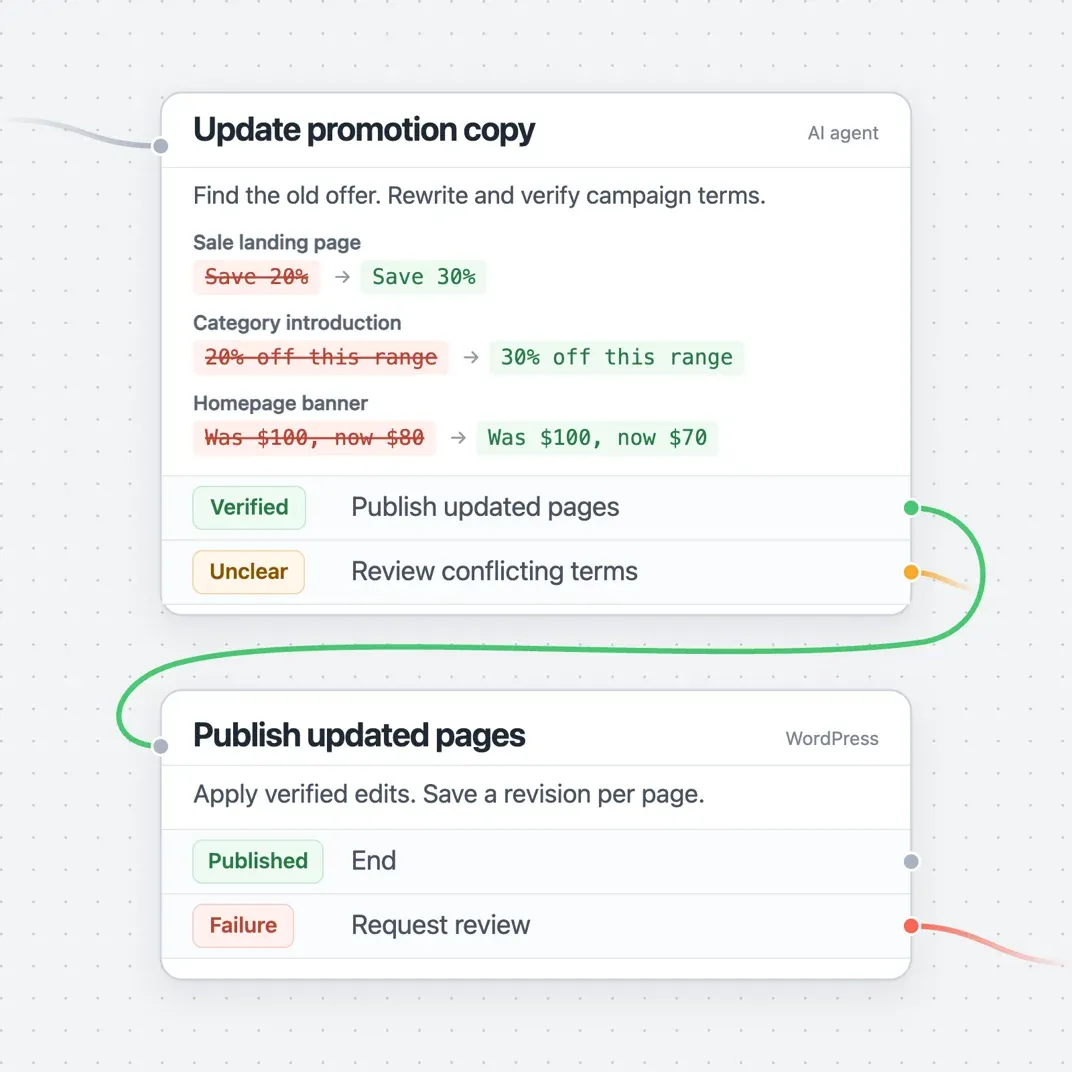
Those can become agentic workflows, with simple scripts for the repeatable parts and AI judgement for the decisions, all modelled on how your team already works.
We’re testing this at Human Made, and the early results suggest the past and the agentic future are a promising match.
Curious what yours hold? Ask Claude or Codex to run this on a copy of your database (never production):
>_ PROMPT
Using read-only queries and scripts on this database copy, turn my post revisions into agent workflows.

Clean: revisions only, no autosaves, system accounts or no-op saves. Last one to two years, not the build or a migration.

Classify: diff each revision against the previous one and label the change: dates, numbers, links, images, sections added or removed, layout, or copy.

Group: find the same change repeated across many pages (a year rolled forward, a link swapped, a block setting changed). Each is a process, even across weeks and editors.

Deliver the top five: name, share of edits, owner, trigger and cadence, steps in order, source of new values, mechanical versus judgement steps, and a draft workflow.

Close with your blind spots: history depth, and content types with no revisions.
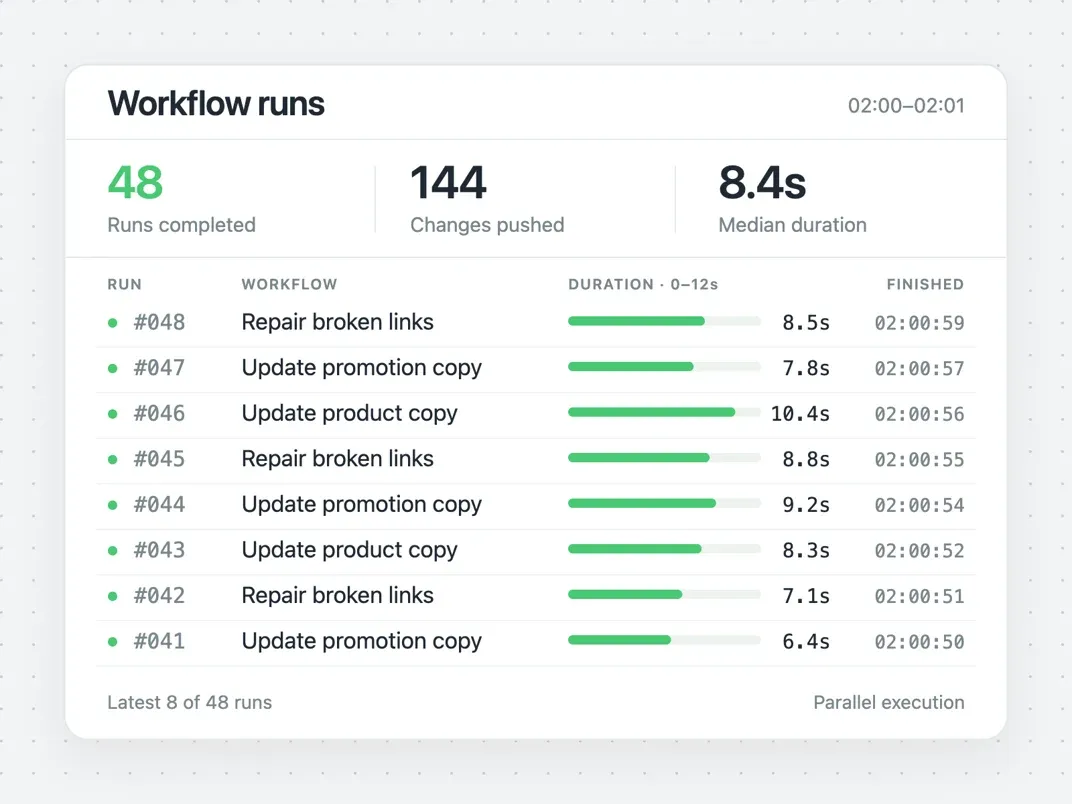
The exciting part isn’t doing the same work faster. It’s moving your team up to higher-value work, and finding the tasks and market edges nobody had time to look for. The old pain points go with it (and yes, we’ll find new ones; we always do). For any large WordPress site, pairing process mining with structured workflows is one of the easiest wins available right now.
How are you solving workflows? If you’d like to try our open-source agentic workflows tool when it’s released, just give us a shout.