


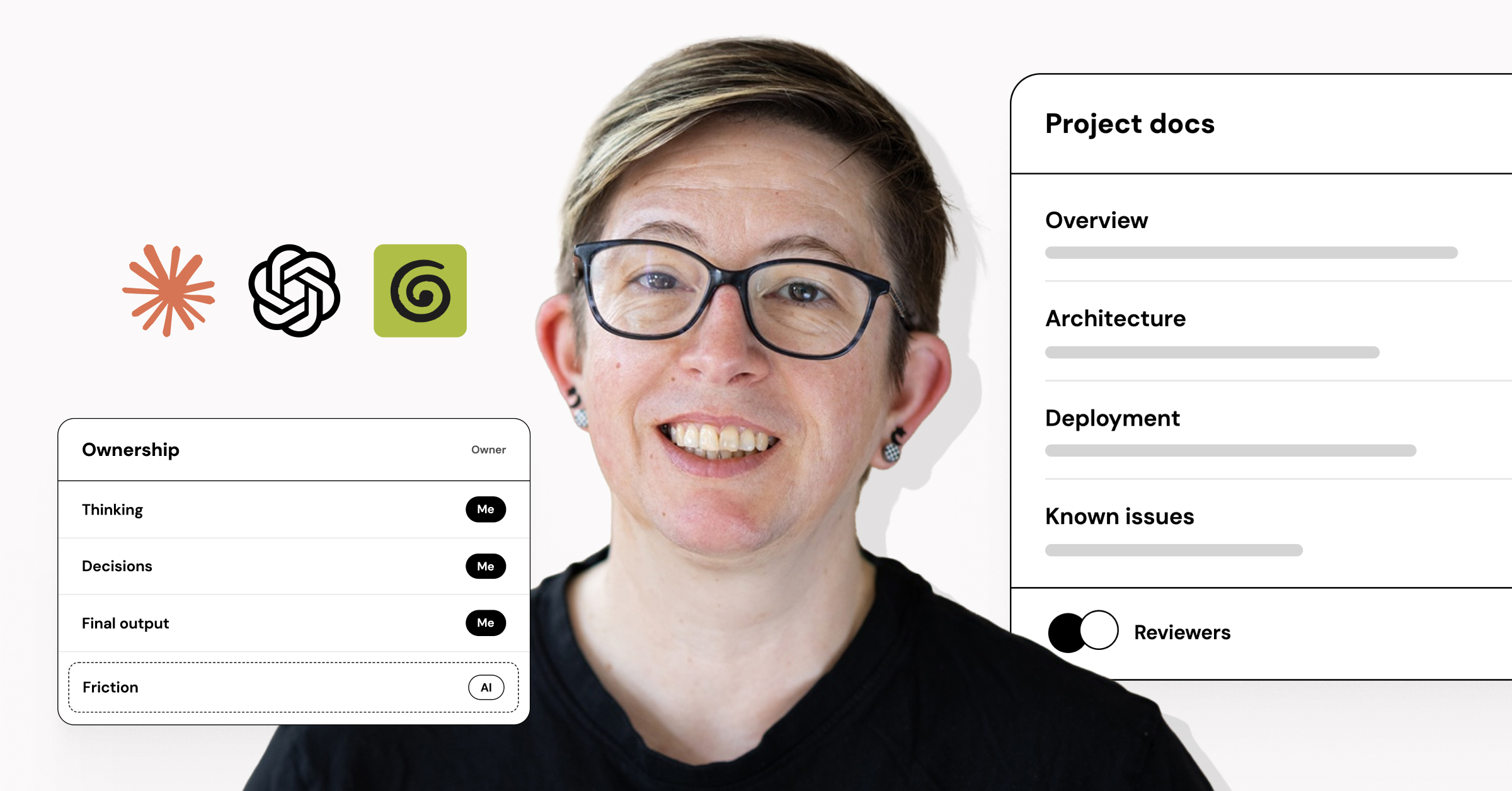
I’m Kirsty, an Engineering Manager at Human Made, where I look after a team of engineers working on projects for enterprise clients.
There have been a lot of conversations about AI recently. A lot of them are understandably focused on technical skills, productivity and making sure we still own our output.
I’ve noticed that when AI comes up in conversations with engineers, the discussion often gravitates towards technical solutions: writing skills, generating code, automating tasks, building tools and making things faster.
Those things are interesting, but they’re not where I’ve personally found the biggest benefit.
I recently read a LeadDev article called AI made me a better engineering leader, which made me think about whether I was measuring the right things. It also made a good point about using AI to get imperfect thinking onto the page, rather than waiting until an idea is fully formed.
That connected with a recent internal discussion at Human Made about readability and our use of AI, particularly the importance of editing AI-generated content and thinking about the audience rather than just accepting whatever it produces.
Both got me thinking about my own use of AI.
I haven’t used AI to vibe-code a revolutionary new tool, and I’m certainly not 1000% more productive. I am still mulling over building a dashboard for my team, though 😉
What I do think is that AI has made me a better Engineering Manager.
Not because it makes decisions for me, or because it has somehow removed the thinking from my job. It has removed some of the bad friction around doing the job.
It’s made it easier for me to get thoughts out of my head, turn conversations into useful documentation, make sense of large amounts of information and communicate things that I probably wouldn’t have got around to communicating before.
TL;DR
AI hasn’t removed the thinking from my job. It’s removed some of the friction around doing it well.
I use it to communicate more clearly, turn conversations into documentation, analyse information, and challenge my own thinking.
I still own the thinking, the decisions and the final output.
There are plenty of ways I use AI, but I’ll focus on three examples where I’ve found the difference particularly noticeable:
- Writing – Getting ideas out of my head and into something I can actually share
- Documentation – Turning conversations and existing information into something the team can use
- Performance reviews – Using AI to help me see the bigger picture across a whole review period
There are plenty of other examples I could give, but these are three where I’ve found the difference particularly noticeable. If you’re mainly interested in the practical examples, feel free to skip straight to them.
The tools I use
I use a few different tools, and I’ve found they each have slightly different strengths.
ChatGPT is the one I tend to reach for when I’m writing. I’ve found the output generally fits my own writing style better, which means I spend less time fighting with the tone of voice and more time actually editing the content. It’s the tool I use most for internal blog posts and generally turning my messy thoughts into something readable.
Claude is particularly useful when I need to work across multiple sources, pull together a lot of information, create technical documentation or build a framework for analysing something. It’s also the tool I tend to use for things like performance reviews, where I’m asking it to find themes across a large amount of information rather than produce something I’m going to publish directly.
Granola sits slightly differently. I use it to capture conversations and meetings, which gives me much better source material to work from afterwards. The important bit for me is that, while I will publish meeting summaries – edited for accuracy of course – I generally go back to the original transcript, rather than relying on the AI-generated meeting summary for bigger tasks.
I’m sure other people have very different experiences with these tools, and I suspect a lot of this comes down to how you prompt them and what you’re asking them to do. These are just the combinations that I’ve found work well for me.
1. Writing: things I actually want to share
One of the biggest changes for me has been writing posts for our internal blog.
As an engineer, I used to love writing documentation. If you’ve ever had me code review something you’d written, you’ll probably remember just how many comments I would leave trying to make things easier to follow and remove assumptions.
Writing things for the wider company was different.
I would agonise over the wording, structure and tone, and whether I’d explained something properly. I wanted things to be perfect.
The inevitable result was that writing took forever, and a lot of things never got published at all.
AI has changed that.
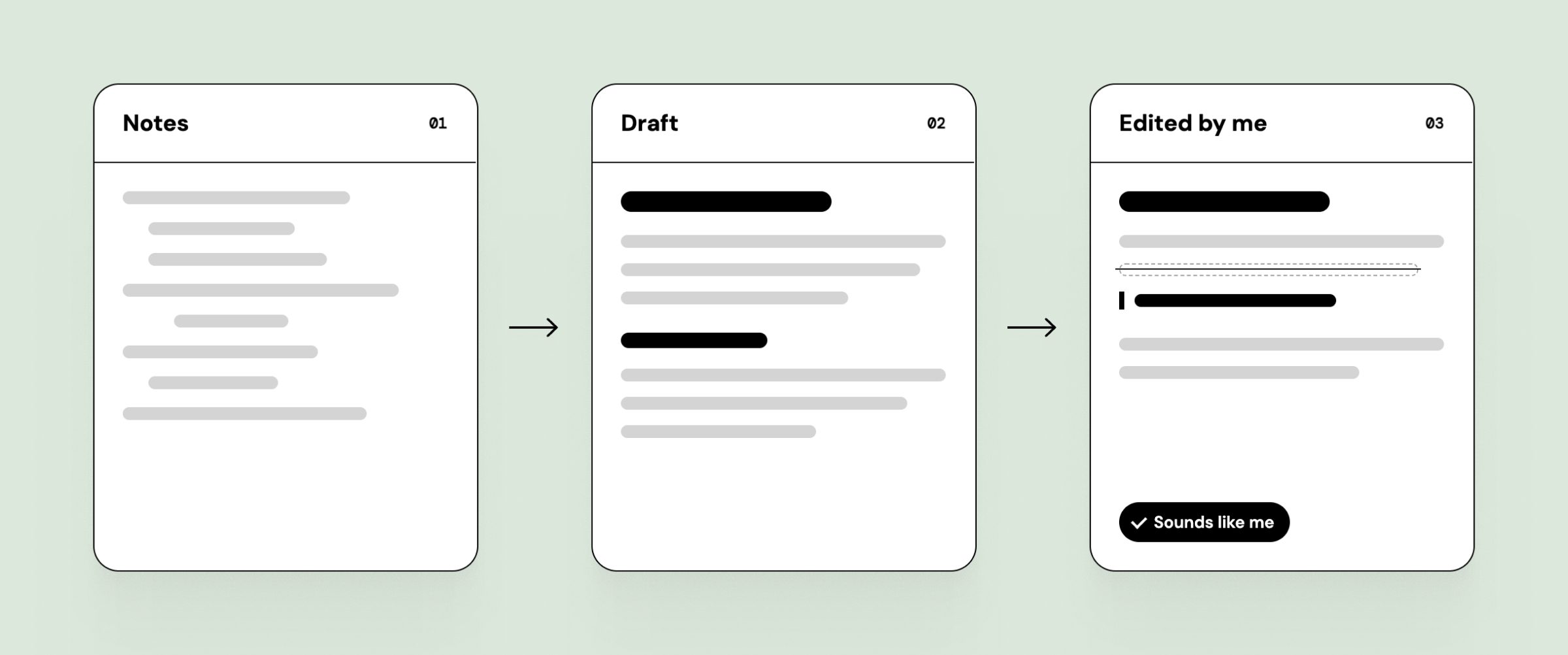
I now start in my markdown notepad, Bear, writing down all my thoughts, arguments, examples and things I think are important. I don’t worry about structure or making it readable. I just get the thinking out of my head.
I then give that to ChatGPT and ask it to turn it into a draft, usually with some guidance about the audience, structure and what I want people to take away.
That’s not normally the finished piece. I’ll edit it myself, changing anything I disagree with, adding what’s missing and removing what’s unnecessary. Then I’ll give it back to ChatGPT to look for repetition, improve awkward sentences or flag anything that doesn’t sound like me.
The important distinction is that the ideas, opinions and decisions are mine. AI is helping me get them into a form other people can actually read.
And I think the results speak for themselves.
Since around July 2025, I’ve written more internal blog posts than I did in all my previous years as an engineer. These aren’t AI-generated thoughts; they’re things I wanted to say but previously struggled to find the time and headspace to communicate.
They’ve covered everything from introducing new tech lead handover documentation and getting better at team communication, to onboarding freelancers into an existing engineering organisation and what we learned from growing the team.
What works for me
- Get my actual thoughts down before worrying about the prose.
- Tell the AI who the audience is and what I want them to take away.
- Edit the output myself, including checking facts and anything important.
- Use AI again to refine the final version, but make sure it still sounds like me.
The things I try to avoid are pretty simple: letting AI decide what I think, publishing something just because it sounds polished, or using “AI can write it for me” as an excuse not to think about what I actually want to say.
2. Documentation: turning conversations into something useful
The same approach has been incredibly useful for documentation.
When we onboarded five freelancers into my team, for example, we realised our onboarding documentation needed some serious improvement. As a result, we now have a much more robust team wiki that covers onboarding, our approach to project visibility, communication and more.
More recently, one of our engineers had ended up with a huge amount of technical knowledge about a new client project. We had an audit to refer to, but much of the migration work had been done by them and we didn’t yet have much project documentation. Then, unexpectedly, they needed to step away for a few months.
This could have been a serious problem, so I got them on a call and we talked through everything that someone taking over the project would need to know. That conversation was recorded in Granola.
I took the original transcript, not the AI-generated summary, and used Claude to help turn that conversation into a structure for useful project documentation. I then reviewed it, added any information I could from notes they had left, asked Claude to pull in anything relevant from the GitHub repository and the original audit, and then used ChatGPT to make some of the language easier to read without removing the technical detail.
That gave the team a useful starting point much faster than trying to write everything from scratch.
It wasn’t perfect, and that’s important.
I’m not the engineer working on that project, so I couldn’t personally verify every technical detail. I asked engineers in the team to review it, and the expectation is that the documentation continues to evolve as people use it.
AI got us from “all of this information is in one person’s head” to “we have something we can work with” very quickly.
I’ve used similar approaches elsewhere. Conversations about handling support requests on small retainers became a documented support process for one client, which has since evolved into a broader team approach and client-facing documentation. In cases like this, one conversation can end up producing useful documentation for more than one project.
What works for me
- Start with the original source material wherever possible.
- Give AI enough context to understand what the documentation is actually for.
- Get people with the relevant subject-matter knowledge to review it.
- Treat the first version as a starting point and keep updating it as you learn more.
The main thing I try to avoid is treating an AI summary as a substitute for the original conversation, or letting documentation become “AI-generated and therefore nobody’s responsibility”.
3. Performance reviews: finding the bigger picture
This one is a little less visible because the output isn’t something I’m publishing.
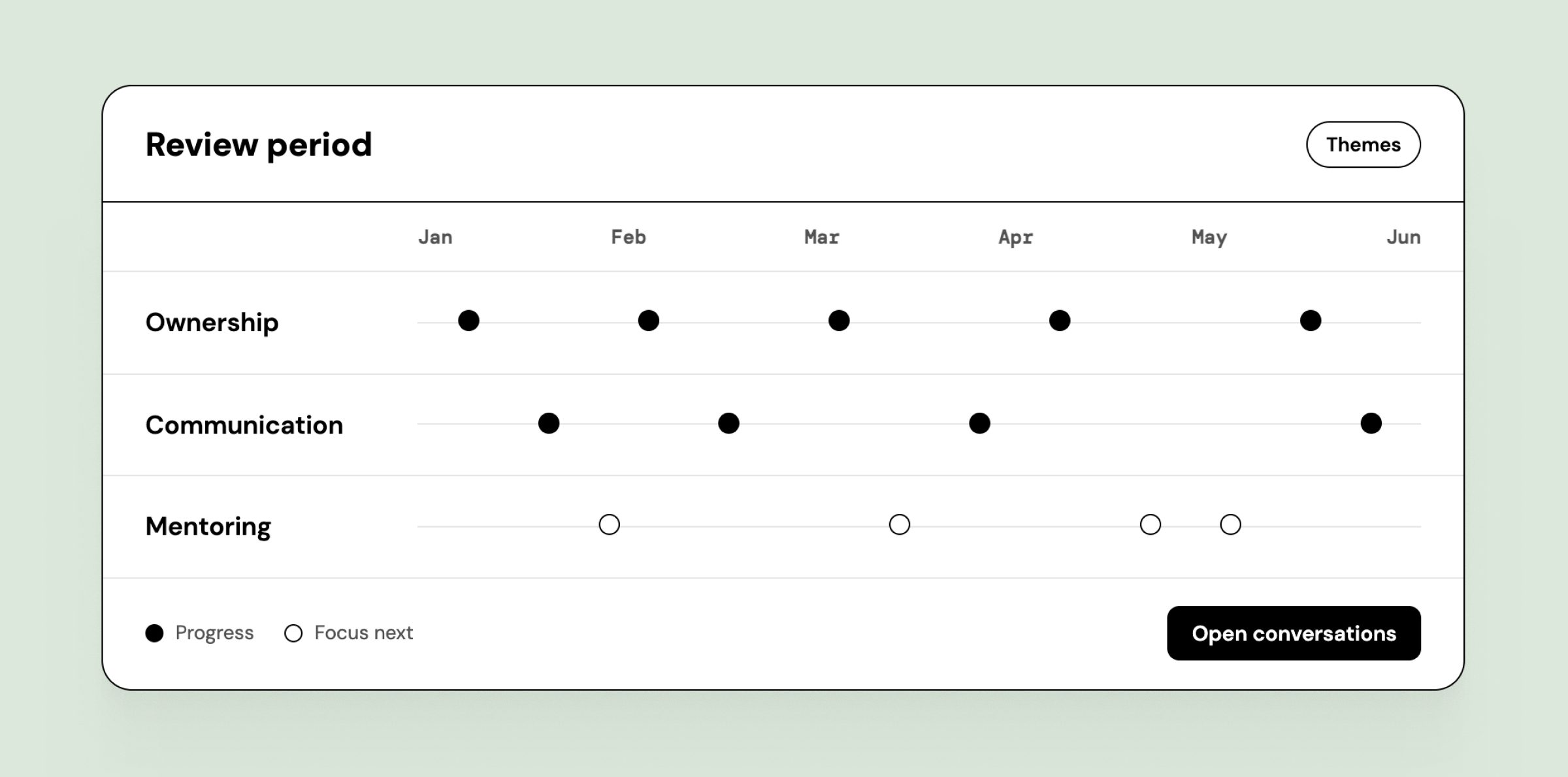
Performance reviews are something I take seriously. I want to understand what has happened over the whole review period, whether someone has genuinely progressed, how that compares with their previous review and where they should focus next.
Historically, that meant manually going through 1:1 notes, project conversations, Slack messages and meeting notes.
Granola has made it much easier to have meaningful conversations without simultaneously worrying about capturing every detail, and I now use Claude to analyse the meeting transcripts and relevant Slack conversations from the review period.
I don’t ask whether someone has had a good review. I ask it to identify themes and pull out the specific conversations so I can review them myself. The judgement and feedback remain mine.
That gives me a much better starting point for asking myself:
What’s the story of this review period?
It helps me avoid over-weighting whatever happened most recently or whatever conversation happens to be freshest in my head.
AI just helps me see the forest rather than spending all my time looking at individual trees.
And, yes, I also occasionally ask it to make my review shorter because apparently I am physically incapable of writing a small amount of text.
What I’ve learned
1. Give AI something real to work with.
The better the raw material, the better the output.
2. Don’t outsource the thinking.
I want AI to help me communicate what I think, not decide what I think.
3. Treat the output as a starting point.
I expect to edit it, challenge it and have other people validate it where appropriate.
4. Be careful what you put into these tools.
Think about what you’re sharing, which tools you’re using, and what your organisation’s policies say. “AI is useful” isn’t a reason to ignore confidentiality, privacy or security.
I’ve been careful throughout to keep things within the tools Human Made has approved, and private where they need to be.
So, has AI made me a better Engineering Manager?
I think it has.
But not because it has made me faster at doing the job. It’s helped me do more of the things I already believed were important.
I communicate more. I document more. I capture more of what we learn. I’m more consistent in things like performance reviews. I’m able to challenge my own thinking more often. And, perhaps most importantly, I’m less likely to have a good idea and then never do anything with it because the friction of writing it down feels like a monumental task.
One of the things from the LeadDev article that has stuck with me is the warning not to confuse feeling faster with actually improving our work. I’m not particularly interested in how many words AI helped me write, how many minutes it saved me, or how many things I can get through in a day.
The improvements I care about are harder to measure:
- Am I communicating things I wouldn’t otherwise have communicated?
- Are we capturing knowledge that might otherwise be lost?
- Are my reviews better because I have more time to look at the bigger picture?
- Are decisions clearer for the people who need to act on them?
Ultimately, AI hasn’t replaced my judgement. It has made it easier for me to apply it.
So rather than asking “What can AI do for us?”, I’m increasingly interested in asking:
“What good work am I currently not doing because the friction around it is too high?”
That’s where I’ve found the biggest gains.
And for those of you who think I still haven’t answered the most important questions: yes, AI helped me write this, yes, I did ask it to shorten it (this is the best it could do), and no, I still haven’t built that team dashboard.
Yet…