


There are two versions of you reading this.
The 2026 you is tired. You’ve sat through the “AI will change everything” spiel at conferences and on LinkedIn. It’s simply noise now. Your team isn’t waiting for some agentic revolution; it has to deal with ticket #2891 and the 47 product images missing alt text (third time this year).
Fast-forward a few years. The 2030 you is drinking coffee. Less caffeine today, as your smartwatch told the beverage machine you slept well.
Your phone buzzes with a Teams notification. You skim it, tap approve, and set it down. You haven’t opened the WordPress dashboard in three weeks. Not because you left WordPress, but because WordPress stopped needing you to show up.
This isn’t yet another gimmick. The reality is here. It’s a trajectory.
In 2025, WordPress shipped something quiet but foundational: the Abilities API. It lets any plugin declare what it can do, not in documentation, but in a way agents can query and execute. Suddenly, 60,000 plugins weren’t just features you clicked through (or ignored in your sidebar). They became actions that could be triggered.
That was the seed, the shift from passive to proactive.
Three patterns define the proactive CMS:
- Monitoring: It watches for anomalies you’d miss
- Remediation: It fixes what it can, escalates what it can’t
- Recommendation: It surfaces strategic opportunities, but waits for your call
Let me show you what 2030 looks like…
6:47am: While you slept, a regulatory disclosure update landed. Unfortunately, the new language wasn’t stored in one place; it lived across product pages, form consent checkboxes, footers and FAQs. Some content was thankfully bound to Synced Patterns, some was static, and some was embedded in HTML spaghetti with phrasing that technically complied with the old rule (but still doesn’t with the new). Your compliance agent reacted quickly, applied the changes to staging first and generated a before/after diff across 1,347 affected pages.
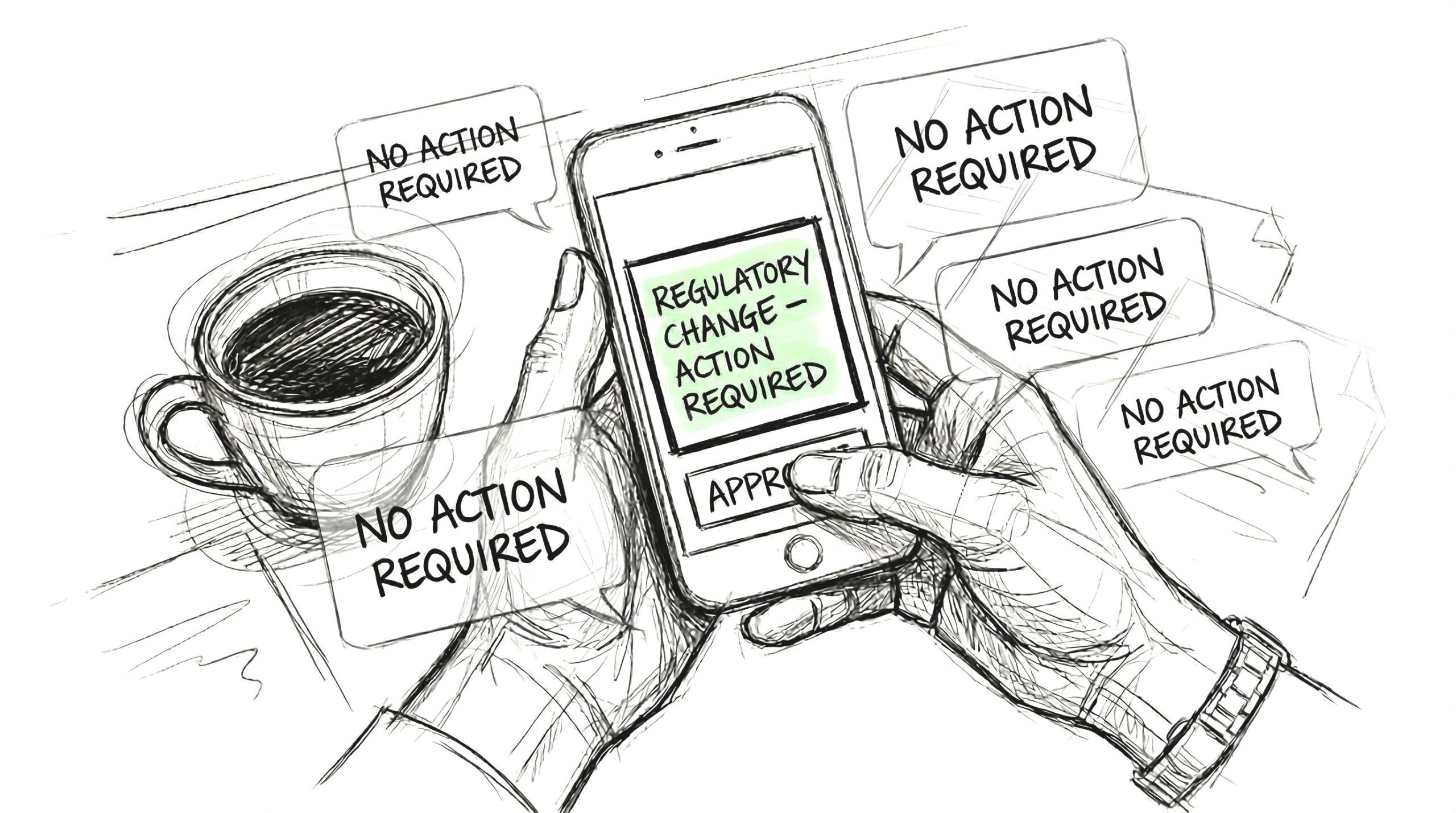
8:12am: A summary of these changes has been sitting in your inbox: consolidated diff, risk flags, and a single approval button. You reviewed the preview, approved the batch for production, and moved on with your day a few minutes later. You spot a priority notification; there’s another Future of WordPress event. You always attend those and RSVP immediately.
10:58am: You’re in the car, en route to your 11am quarterly meeting. You’re not driving and the car isn’t actually yours, it just feels like it. The everything-as-a-service economy is in full swing. The car is taking you to the office (for that one on-site day in the week), and it’ll park itself somewhere you don’t know and don’t need to.
1:26pm: Meanwhile, your meal printer at home has gone rogue. You’ve been printing Taco Tuesdays for the last 3 nights– it noticed you were running low on protein pods and ordered refills. Top-ups will be home before you are.
2:14pm: Without anyone noticing, a content migration from last week broke some internal links and traffic was nuked on affected pages. The monitoring agent flagged the anomaly and traced the cause, patched 12 pages, created the 301 redirects, and logged the incident. You got a notification between meetings: “Fixed the thing you didn’t notice was broken. You’re welcome.” You now wonder if you can tweak its humour setting.
3:34pm: A cluster of old blog posts got flagged for consolidation: 23 thin pages cannibalising each other, none of them ranking. The agent mapped the structure, showing which URLs merge into which pillars, where the redirects point, and which internal links need updating. It didn’t write the new content. It told you where to consolidate; your team decides what to say. Your company made a values-based decision years ago: no AI-generated content in the final output. The agent builds scaffolding, yet humans continue to build meaning.
6:15pm: You approved the structure from your inbox on the drive home. Never opened WordPress. Your home adjusted the thermostat before you left, knowing you’d be gone till evening.
6:47pm: Taco Tuesday for the fourth night in a row, because why not. Just in time for the latest episode of Sanctuary Moon.
Here’s the thing; I don’t think the WordPress stuff I talk about is going to take four years. The infrastructure has landed. The only question is, are you building towards it?
The mature Site Editor (Sync Patterns, Block Bindings, etc) and Agentic AI (Abilities API, MCP, etc) is a power-combo, like Messi and Neymar, Serena and Venus, Scorsese and De Niro. This is a time to build and win.
Agents can connect to WordPress as a proper server, grounded in real site data and respecting real permissions. This isn’t a chatbot pasted onto your dashboard. It’s a layer that understands what your site can do, what it contains, and what you’ve authorised it to touch. Agents don’t guess; they query and act within governance.
This is what Zapier wanted to become, but couldn’t. If-this-then-that doesn’t scale when “this” gets fuzzy. Agentic does.
It is really a shift in posture. I don’t know exactly when this becomes normal. But the pieces are here – we can all feel the magic and chaos of being early adopters again, once more into the fray (like trying HTML frames or jQuery for the first time years ago).