


Lewis Fry Richardson once estimated that to predict the weather globally in real-time, you would need a “Forecast Factory”, a stadium filled with 64,000 human calculators conducting the math in parallel. In the centre of it all, a conductor shining a light to coordinate everyone.
This was 1922. It was impossible. By the time the humans finished calculating the forecast for “tomorrow,” tomorrow had already happened. The latency of manual labour rendered the data useless.
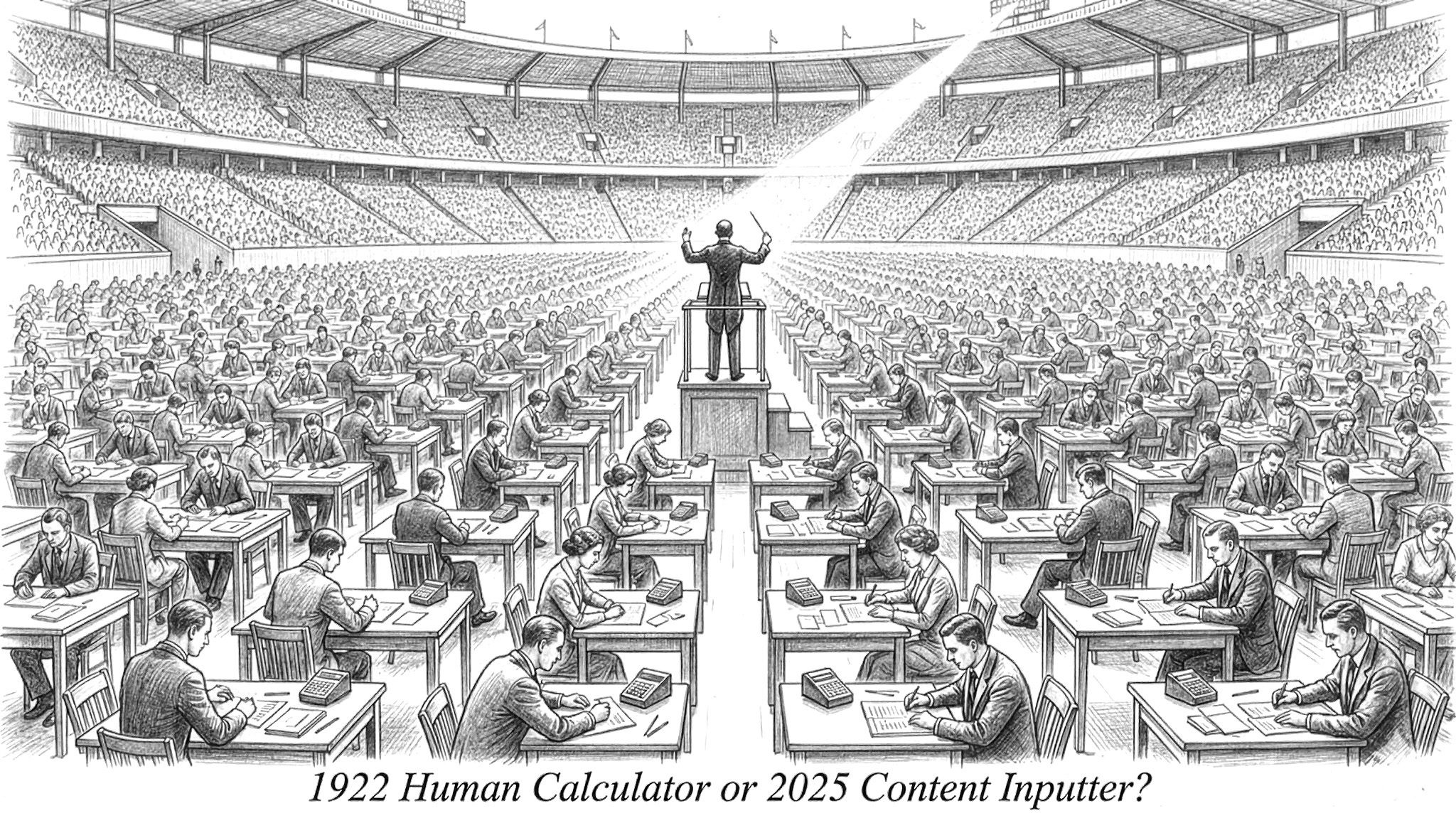
Fast-forward to 1977. Cray Supercomputers enter the arena. They began predicting an entire week’s worth of weather data in moments. The bottleneck shifted from calculation to interpretation.
For the last 20 years, WordPress has functioned much like Richardson’s 1922 stadium.
It has been a “Content Factory” relying on human latency. We often have the data; it sits in a Sharepoint instance, a Google Sheet, or a CRM. For years, we tried to bridge this gap with band-aid solutions, such as “Custom Meta Boxes.” We forced editors to fill out rigid, disconnected forms at the bottom of the screen. When that proved too rigid for modern design, we reverted to the stadium; we paid humans to manually copy-paste that data into a visual editor. What a waste.
But last year, WordPress introduced a feature that finally brings the Supercomputer into the room: Block Bindings.
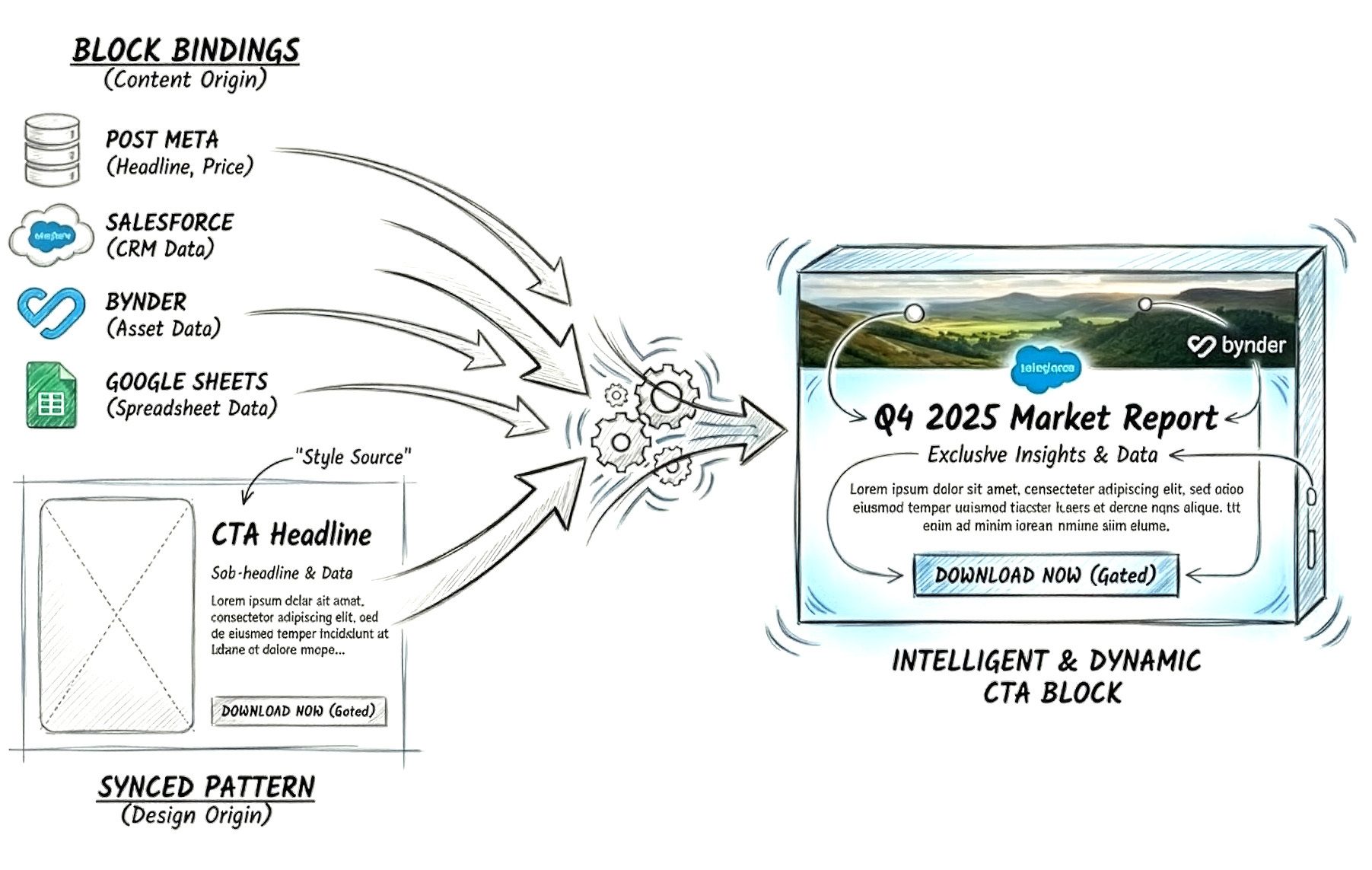
Block Bindings allow you to connect internal or external data sources directly to your blocks programmatically. It shifts the paradigm from “duplicating content” to “architecting connections.”
✨What you can do today:
- Identify “Single Source of Truth”, Remove Duplicates. Take note of any areas where you’re re-entering business data unnecessarily. Not only does this cost extra time, but may also become stale quite quickly. Figure out if the source of truth is then internal (post meta, advanced custom fields, etc.) or external (APIs).
- Lock Design, Lock Content. By using Synced Pattern Overrides, you are locking down the design of blocks globally. Changing the design in one place changes it everywhere. You’ll do the same thing with content, by mapping source data fields (either post meta or API) to attributes within the design, thereby creating highly intelligent and scalable business blocks. Check out VIP’s Remote Data Blocks to get started on easy-to-use external integrations.
- Create Programmatic Content. By leveraging your Synced Pattern Blocks with Block Bindings, you are able to scale pages upon pages of dynamic content tailored to your business data, be it for products, departments, teams, people, services or more. Overall, you’ll increase your site experience and SEO, GEO, AEO footprint.
- Agentic Future-Proofed. By having moved your content out of HTML blocks, and instead having them reliant on real structured database content, your blocks are even ready for agentic workflows in the future. Learn more at our AI readiness event coming up on 10th Dec.
This is the future. If you have any questions, simply ask me.
The Grander Narrative: From Editor to Orchestrator
Circling back to our story, we are witnessing the death of the “Content Factory” and the birth of the “Connected Canvas.”
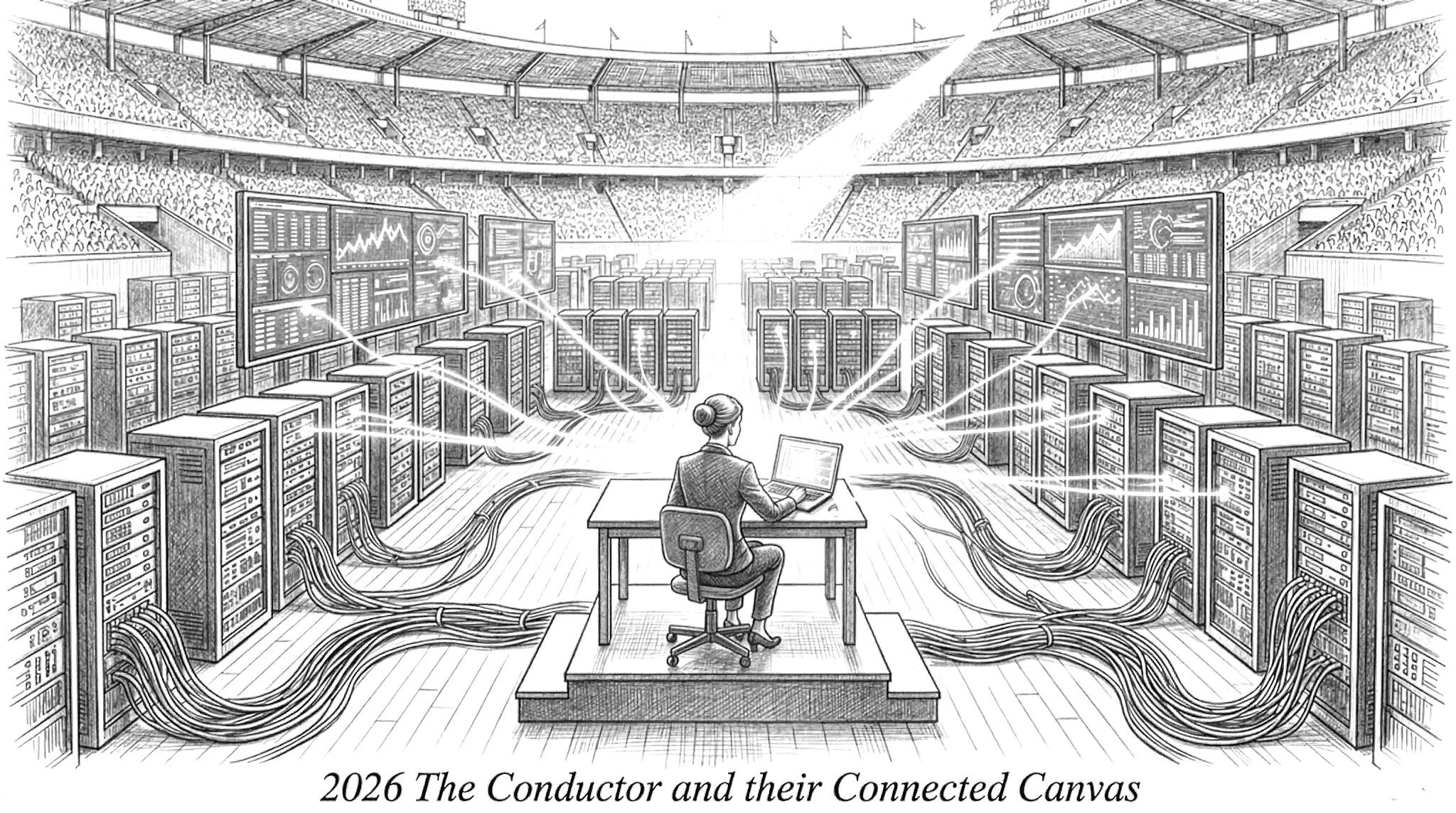
Just as the Cray Supercomputer didn’t eliminate meteorologists but elevated them to analysts, Block Bindings don’t eliminate creators; they elevate them to System Architects with a renewed sense of creativity.
We are moving toward an agentic future where AI doesn’t just write text, it orchestrates systems. An AI agent can now query your site’s abilities, fetch sales data, and spin up a report page by binding blocks to that data automatically. We’ll be talking more about AI and WordPress in our upcoming AI Readiness event on 10th Dec – register now to save your spot.
The days of manual data entry are over.
The stadium is empty.
The lone conductor is now designing the system.