


For non-technical stakeholders, choosing a WordPress agency can feel like guesswork.
Most agencies sound convincing. Many have polished portfolios. Pricing varies wildly. And without a technical background, it is difficult to separate genuine engineering expertise from surface-level competence.
That gap matters.
The technical decisions made early in a WordPress project shape everything that follows: performance, scalability, security, editorial experience, and long-term cost. Two sites can look identical at launch and behave completely differently six months later.
We’re here to help you spot that difference.
Why technical depth matters more than you think
At a glance, most WordPress builds look similar. Under the surface, they rarely are.
Less experienced agencies tend to optimise for speed of delivery. That often means leaning heavily on page builders, stacking plugins, or introducing custom code that bypasses WordPress conventions. It works, until it doesn’t.
What that usually leads to:
- performance that degrades as the site grows
- updates that break critical functionality
- security exposure through poorly maintained dependencies
- rising maintenance costs over time
- difficulty integrating with other systems
- less editorial flexibility and creativity
- developer support is required for simple content or design updates
More mature teams take a different approach. They build with WordPress, understand its capabilities and are close to its evolving roadmap. They make fewer shortcuts early on, so you aren’t paying for them later.
The difference is rarely visible in a demo. It becomes obvious in ownership.
WordPress core alignment and contribution
A simple way to gauge technical maturity is to look at how an agency relates to WordPress itself.
WordPress isn’t static. It evolves continuously through an open-source community. Agencies that stay close to core benefit from that evolution. Agencies that fight it tend to carry increasing technical debt.
You are looking for alignment, not reinvention.
Strong signals include a preference for native functionality, a clear awareness of upcoming changes, and an absence of unnecessary abstraction layers. The best teams will also contribute back, whether that’s to core or the wider ecosystem. The Five for the Future pledge database is a great resource for checking which organisations have made a commitment to contribute regularly.
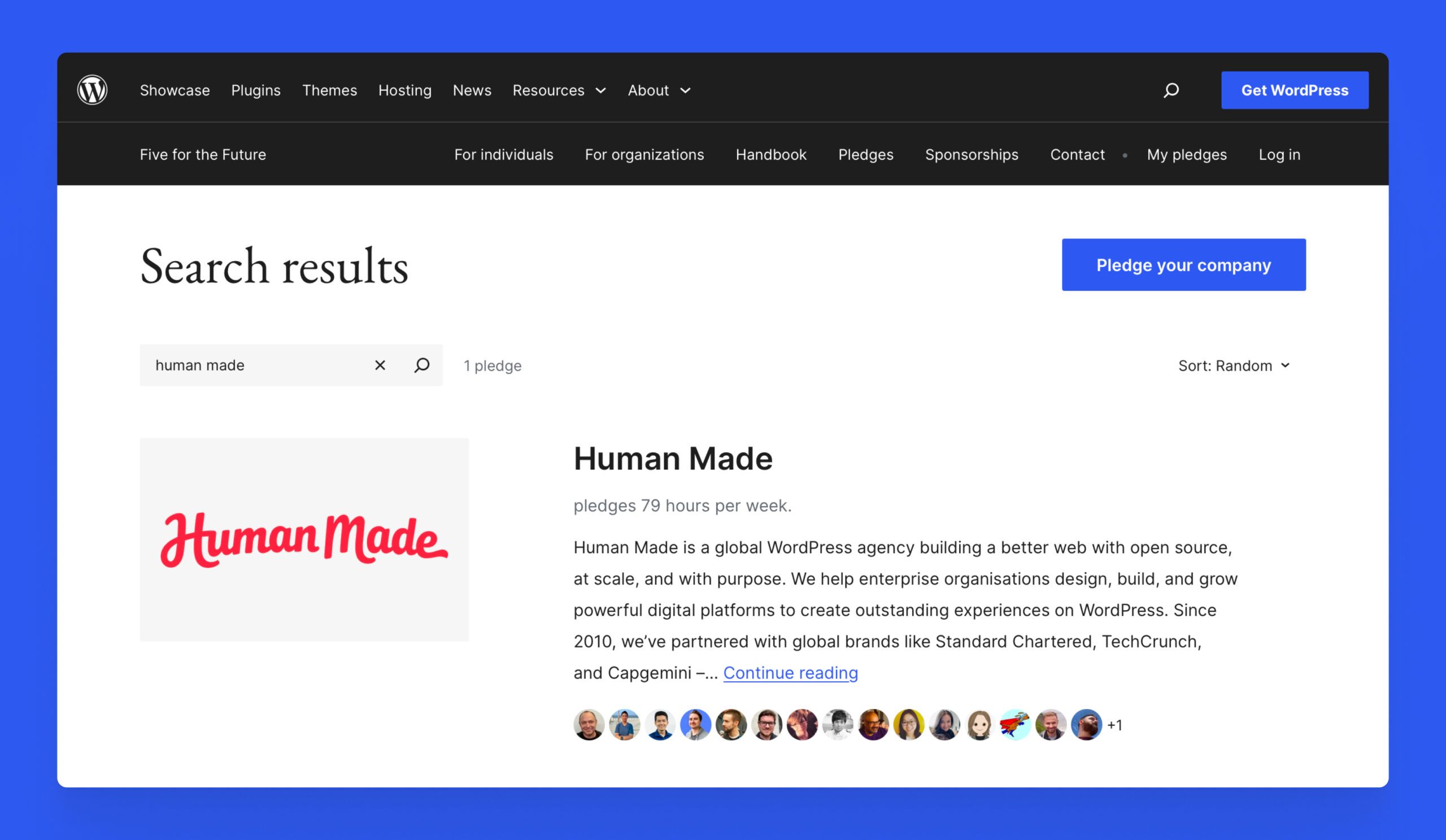
That contribution matters. It’s one thing to use WordPress; it’s another to help shape it.
If you are not sure how to assess this, ask directly:
- Do you contribute to WordPress?
- How do you stay aligned with core updates?
- Where have you deliberately chosen core over custom?
Clarity and intent are more important than perfect answers. There’s got to be an obvious culture of contributing from the top down.
Modern WordPress: Full Site Editing and the block editor
WordPress has changed significantly. Not every agency has kept up.
The block editor and Full Site Editing represent a shift towards a more flexible, system-driven way of building sites. They’re more than new tool: they change how content teams work and how sites evolve.
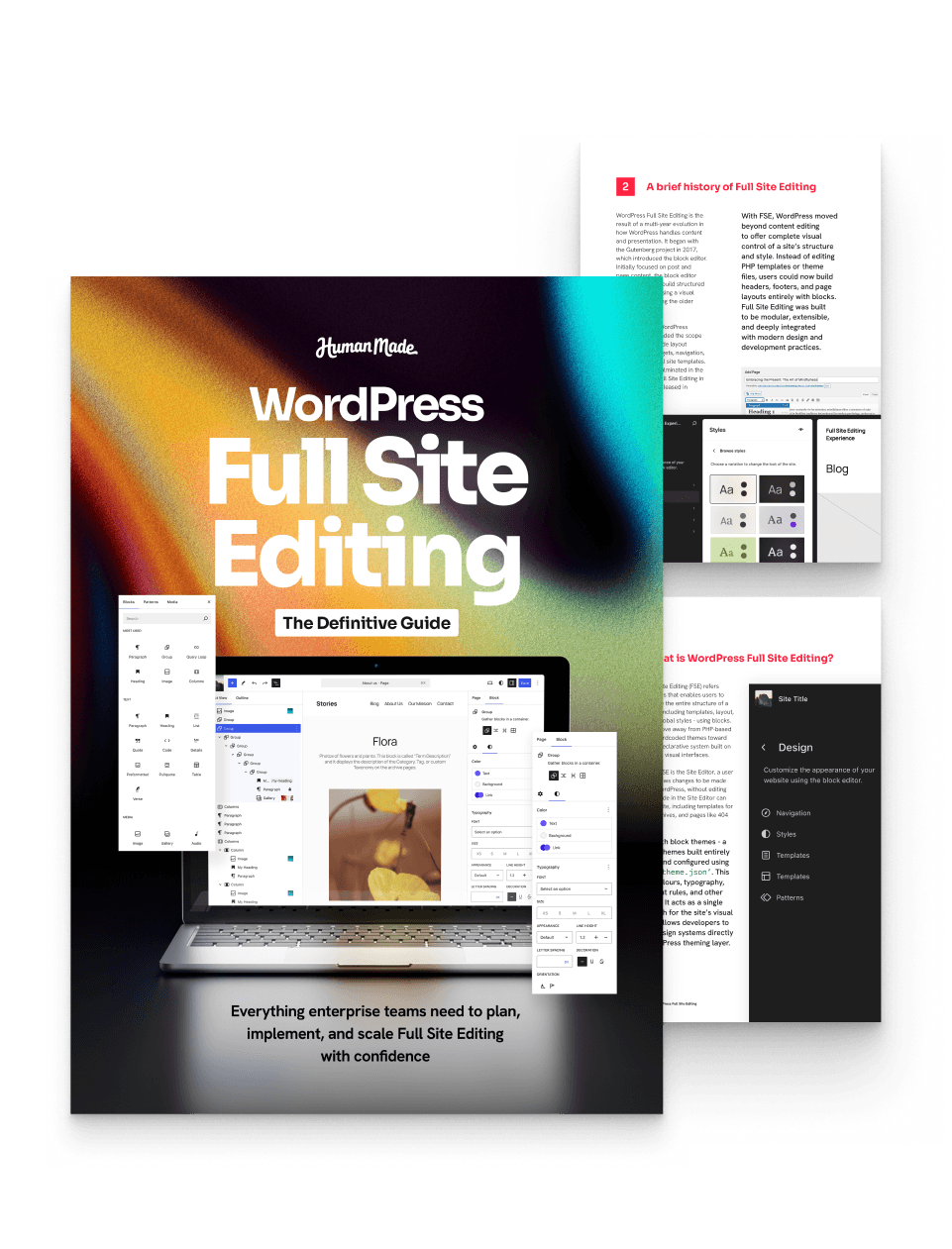
Get the whole story on Full Site Editing and what it means for enterprise teams.
Some agencies still default to older approaches. Classic themes. Heavy page builders. Layered abstractions that make simple things harder than they should be.
That’s not always wrong, but it should always be a conscious choice.
A technically strong agency will be comfortable explaining where modern WordPress fits, where it does not, and why.
In practice, that usually means:
- They treat the block editor as the foundation, not an add-on.
- They understand block-based theming and where Full Site Editing is appropriate.
- They create custom blocks when it adds value, not as a default.
- They think about the editor experience as carefully as the front end.
If those points are missing from the conversation, that tells you something.
Code quality and engineering standards
You don’t need to read code to understand whether an agency takes engineering seriously.
You just need to listen to how they describe their work.
Teams with strong engineering practices tend to talk about process with confidence and specificity. They can explain how things are built, tested, and maintained without resorting to jargon or hand-waving.
Look for evidence of discipline.
Version control is standard. Code is reviewed. Deployments are structured, not manual. There is a clear approach to testing, even if it is pragmatic.
Just as importantly, they can connect those practices to outcomes.
Performance is considered from the start, not retrofitted. Accessibility is treated as a requirement, not an enhancement. Security is built in, not patched on.
If the answers feel vague or overly simplified, they probably are.
Questions to ask in a pitch or discovery meeting
You don’t need technical knowledge to ask effective questions. You just need to focus on how decisions are made.
A few well-placed questions can reveal a lot:
- How do you decide what should be custom versus using existing WordPress functionality?
- What does a well-architected WordPress project look like to you?
- How do you approach performance from the start of a project?
- What technical mistakes do you see most often in WordPress builds?
- How do you ensure the site is maintainable over time?
Then listen carefully.
Strong agencies will talk about trade-offs. They will explain why, not just what. And they will connect technical decisions back to business outcomes without being prompted.
Personability and working relationship
Technical capability matters. But so does what it is like to actually work with the team.
Most enterprise WordPress projects are not short engagements. They involve ongoing collaboration, trade-offs, and moments where clarity matters more than speed. The relationship you have with the agency will shape that experience just as much as their technical decisions.
It is worth asking a simpler question alongside everything else: can you see yourself working closely with these people?
Trust is a useful proxy here.
Do they listen carefully to your brief and reflect it back with clarity? Do they explain their thinking in a way that makes sense, without defaulting to jargon? When something is complex, do they simplify it or hide behind it?
The strongest teams are able to translate technical decisions into clear, practical implications. They bring you into the process rather than keeping you at a distance.
There is also a more human dimension to consider.
Is the conversation easy, or does it feel strained? Do they challenge you constructively, or simply agree? Can they navigate ambiguity without creating confusion?
These signals matter because they compound over time.
A technically strong agency that communicates poorly can make a project feel difficult. A truly effective partner will make the process feel structured, collaborative, and, importantly, manageable.
That does not mean every interaction needs to be effortless. But it should feel like a working relationship you would be comfortable relying on.
Red flags to watch for
Some warning signs are easy to miss if you are not looking for them.
Over-reliance on page builders without a clear reason is one. So is solving simple problems with large numbers of plugins. Proprietary frameworks that lock you in should raise questions immediately.
Pay attention to tone as well as content.
If an agency dismisses WordPress core, avoids discussing the block editor, or struggles to explain their decisions in plain language, that is usually a signal of weak foundations.
Equally, if there is no clear story around updates, maintenance, or long-term ownership, you should assume it has not been thought through.
Making a confident decision
You don’t need to become an expert to evaluate one.
The best WordPress agencies are capable, but also intentional. They align with the platform, invest in good engineering practices, and build with the long term in mind.
Just as importantly, they can explain all of that clearly.
If you focus on those signals, you move the conversation away from surface-level comparisons and towards something more meaningful.
That is where the real differences are.