Choosing the wrong WordPress agency rarely looks like a mistake at the time. It looks like a great pitch, a polished proposal, and a shortlist of impressive client logos. The problems don’t surface until months into delivery — and by then, switching agencies costs time, money, and momentum.
The right questions can surface most of this risk before you sign anything. Weak agencies tend to answer vaguely or pivot back to generic features and deliverables. Strong ones answer with specifics, trade-offs, and real examples, because they’ve solved these problems before.
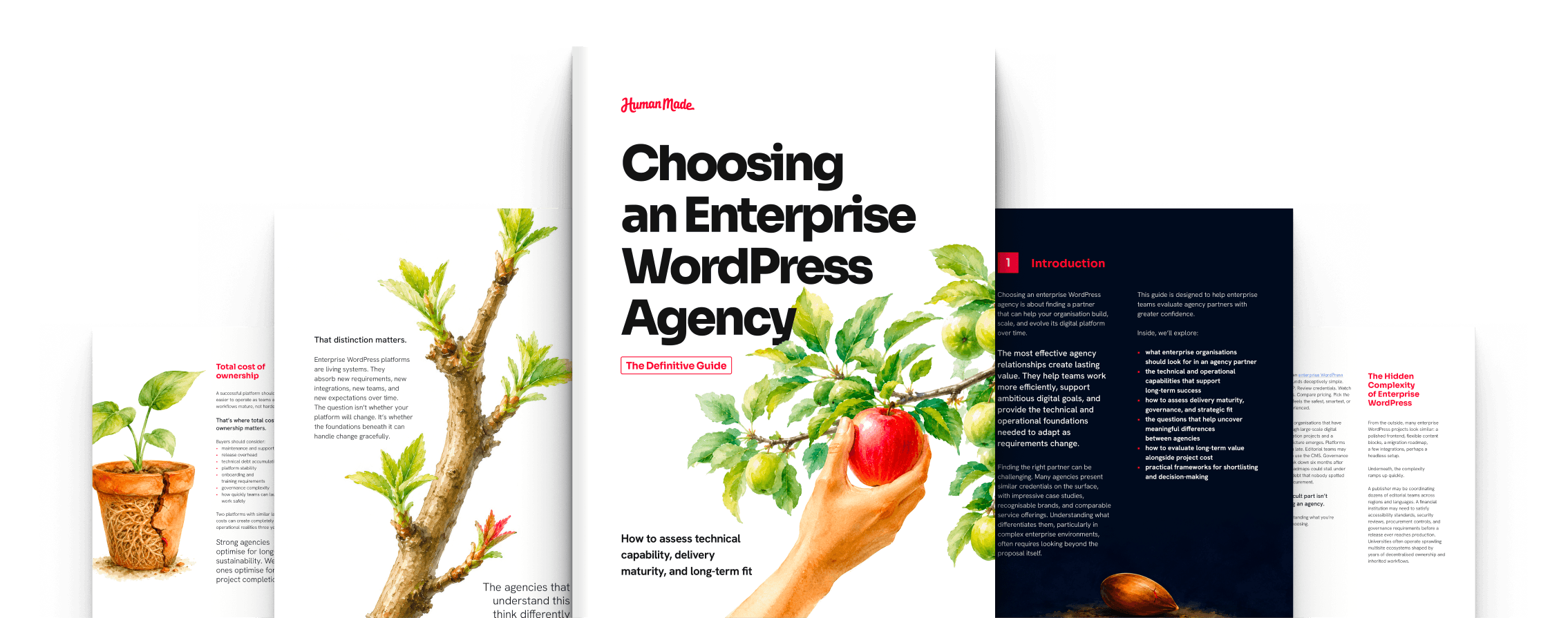
Below, we break down the questions to ask when choosing a WordPress agency, organized by what each one actually reveals. If you want the full framework behind these questions, including a ready-to-use scorecard, check out our Definitive Guide to Choosing an Enterprise WordPress Agency.
Why the Right Questions Matter More Than the Right Proposal
Most enterprise WordPress agencies look nearly identical on paper. Anyone can polish a set of case studies, a service list, and a pricing model. What’s much harder to fake is a confident, specific answer to a question the agency didn’t expect.
That’s why we built this list of questions to ask when choosing a WordPress agency around real delivery experience rather than generic hiring advice. Each question tests whether an agency has actually lived through the problem you’re asking about, or whether they’re guessing. For a deeper look at how to weigh the answers, our post on the true cost of choosing the wrong agency explains what happens when organizations skip this step.
Questions About Technical Capability
How do you handle WordPress core and plugin updates at scale?
This question makes a good early test of technical maturity. A vague answer (“we keep things updated”) suggests the agency has no real process. A strong answer covers staging environments, pre-deployment testing, and how updates roll out across multiple sites or environments without breaking production.
What does your deployment workflow actually look like?
Ask the agency to walk you through their workflow step by step. Agencies with mature engineering practices describe this clearly and confidently, from code review through to release. If they struggle to explain it, they probably don’t run a consistent one.

How do you manage accessibility over time, not just at launch?
Many agencies treat accessibility as a late-stage QA checkbox, and that approach tends to break down within months of launch. Strong agencies build accessibility into their design systems and development workflows from day one, and they can describe exactly how they maintain it as the platform evolves.
How do you approach integrations, and what happens when one fails?
Every enterprise platform connects to other systems — CRM, DAM, analytics, marketing automation. Ask how the agency handles failure states, documents dependencies, and keeps integrations maintainable as requirements change. Saying “yes, we can integrate that” is easy. Explaining how they’ll keep it working two years from now takes real experience.
Questions That Reveal WordPress Agency Evaluation Red Flags
How do you approach governance across large editorial teams?
This question separates agencies who’ve genuinely worked at enterprise scale from those who haven’t. Governance at scale means structured permissions, clear escalation paths, and editorial workflows that hold up as teams and content volumes grow. Our breakdown of WordPress agency red flags and green flags covers this pattern in more detail.
What happens when requirements shift significantly mid-project?
Requirements always change. What matters is whether the agency runs a repeatable process for handling it, or treats every change as a renegotiation. Listen for how they discuss trade-offs and re-scoping, not just how accommodating they sound in the room.
Who owns what — delivery, technical direction, and continuity?
Ask directly: who leads delivery, who owns technical decisions, and what happens if a key team member leaves mid-project? Vague answers here often signal unclear accountability once you’re actually working together.

Questions About Long-Term Partnership and Support
How do you reduce technical debt during long-running engagements?
If an agency has never had to answer this question, they’ve probably never run a long engagement. Technical debt accumulates on every platform — the real question is whether the agency actively manages it or lets it compound.
What’s included in the retainer, and how do you manage priorities?
Post-launch support models vary enormously. Some agencies offer proactive, strategic partnerships. Others run reactive ticketing systems that create bottlenecks the moment something urgent comes up. Ask specifically what the retainer covers, how they set priorities, and what SLAs apply.
What operational issues tend to emerge after launch?
This question works as a good gut check. Agencies with real enterprise experience usually answer readily and specifically, because they’ve watched the same patterns repeat across clients. If an agency has nothing to say here, they may not have supported a platform long enough to know.
What a Weak Answer Sounds Like (vs. a Strong One)
Weak answers share a pattern: they stay vague, pivot back to generic features and deliverables, or dodge the specifics of the question entirely.
Strong answers share a different pattern: they include real trade-offs, concrete examples, and an honest acknowledgment of risk. A strong agency won’t shy away from saying “here’s where this gets difficult,” because they’ve already solved that problem before, more than once.
If you take away one thing from this list, take away this: the specificity of the answer usually matters more than the answer itself.
FAQ: Questions to Ask When Choosing a WordPress Agency
What’s the most important question to ask a WordPress agency?
There’s no single most important question, but the strongest signal usually comes from asking what happens after launch — support models, technical debt, and how the agency handles changing requirements. These answers reveal whether an agency thinks long-term or just wants to get you to go-live.
How do I know if a WordPress agency is enterprise-ready?
Look for specific, confident answers about governance, accessibility, integrations, and post-launch support, not just a portfolio of recognizable client logos. Enterprise-ready agencies can explain their processes in detail because they’ve repeated them across multiple large-scale engagements.
What are red flags when hiring a WordPress agency?
Common red flags include agreeing to every requirement without pushback, giving vague or generic answers to technical questions, offering little visibility into QA or release processes, and focusing purely on launch with no discussion of what comes after.
Should I ask these questions during an RFP or in a follow-up conversation?
Ask them in both places, ideally. A whole team can polish a written RFP response. A live conversation, where you can ask follow-up questions and probe deeper, often reveals the real differences between agencies more clearly.
Choosing With Confidence
Asking sharper questions earlier remains one of the simplest ways to avoid an expensive agency mistake later. It costs nothing, and it tends to reveal far more than any proposal will.
For a deeper framework — including a full evaluation scorecard — take a look at our Definitive Guide to Choosing an Enterprise WordPress Agency.