


Over the last few years, web teams have been sold a familiar promise: break everything apart and you will move faster.
Headless CMSs paired with front end frameworks. Visual editors layered on top. Composable stacks assembled tool by tool. The goal was flexibility, but for many organisations the result has been the opposite. More moving parts, more handoffs, more cost, and a growing operational burden that shows up everywhere from publishing workflows to governance.
The complexity tax has come due.
What makes WordPress in 2026 so interesting is that it offers a way out of this stalemate. Not by returning to the monolith, but by delivering the integrated advantage without the historical tradeoffs that once came with it.
A visual editor that can actually scale
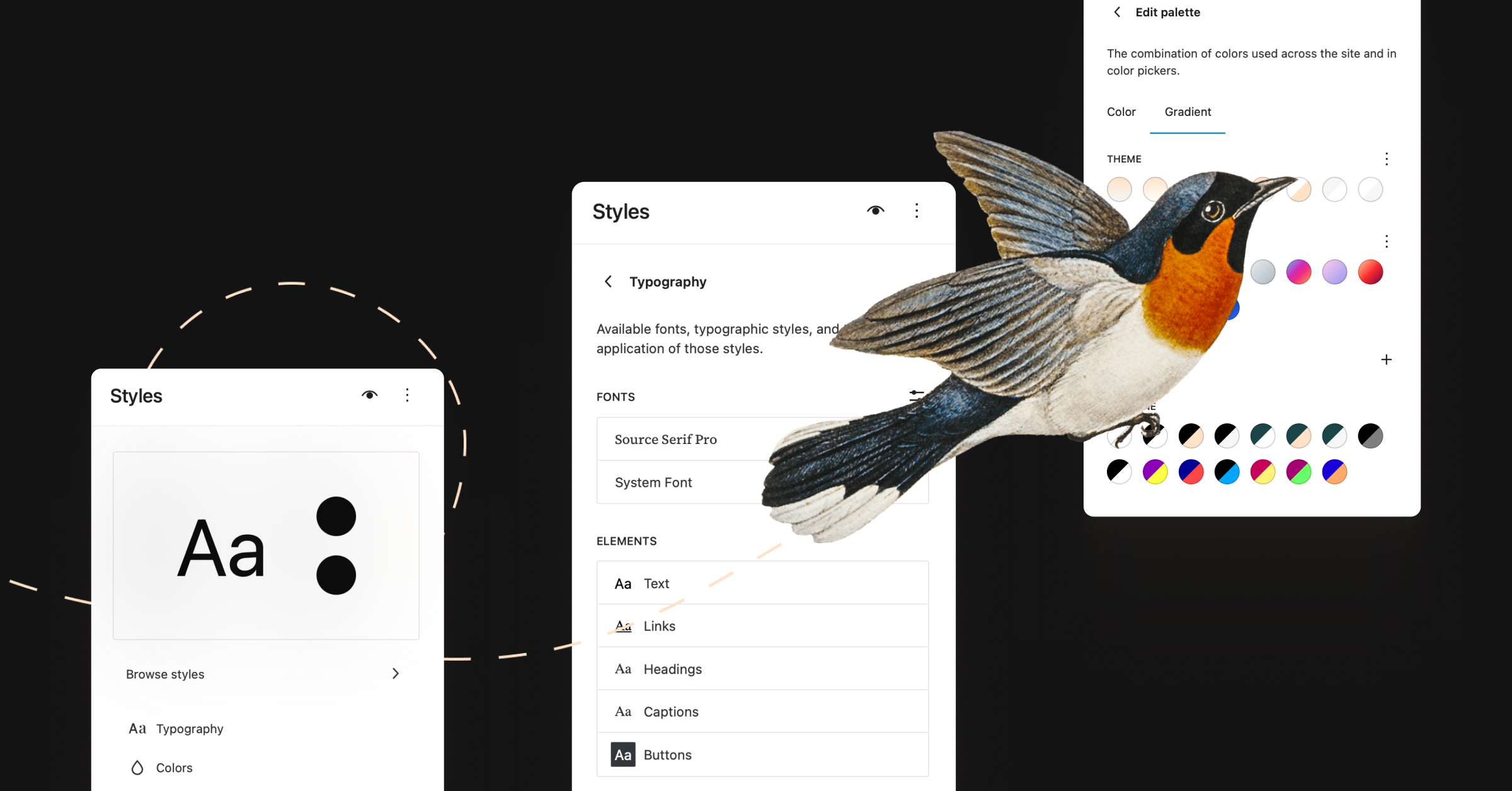
The Site Editor is no longer just an incremental improvement in page building. Combined with Synced Patterns, Block Bindings, Collaboration, and the Interactivity API, it’s maturing into something much more fundamental: a structured visual system that can scale alongside enterprise design systems and large, data rich digital estates.
That distinction matters. Many visual editing systems work well at small scale, but struggle when organisations need consistency across properties, predictable governance, and interfaces that are backed by structured data rather than hardcoded layouts.
WordPress is now crossing that threshold.
The return of integration, this time done properly
For the last decade, the CMS market has tended to swing between two extremes. Fully integrated platforms that scale but feel rigid, and modern stacks that promise flexibility but demand constant assembly and maintenance.
WordPress increasingly sits in a more pragmatic middle ground. The hybrid model, where visual editing and structured architecture coexist, is simply the most effective way for teams to deliver at scale without giving up control.
This is not integration for its own sake. It’s integration as leverage.
Patterns, bindings, and governance by design
Synced Patterns give organisations a way to centralise design intent while still enabling local flexibility. Teams can reuse trusted components across experiences without turning every page into a bespoke build, and without relying on documentation alone to enforce consistency.
Block Bindings extend this further by connecting those components directly to structured data, whether that data lives inside WordPress or beyond it. This makes the editor more than a design surface. It becomes a system interface, where visual work is grounded in real content models rather than fragile logic or third party glue.
The result is a much more robust form of WYSIWYG, one that fits the reality of modern enterprise publishing.
Interactivity without unnecessary architecture
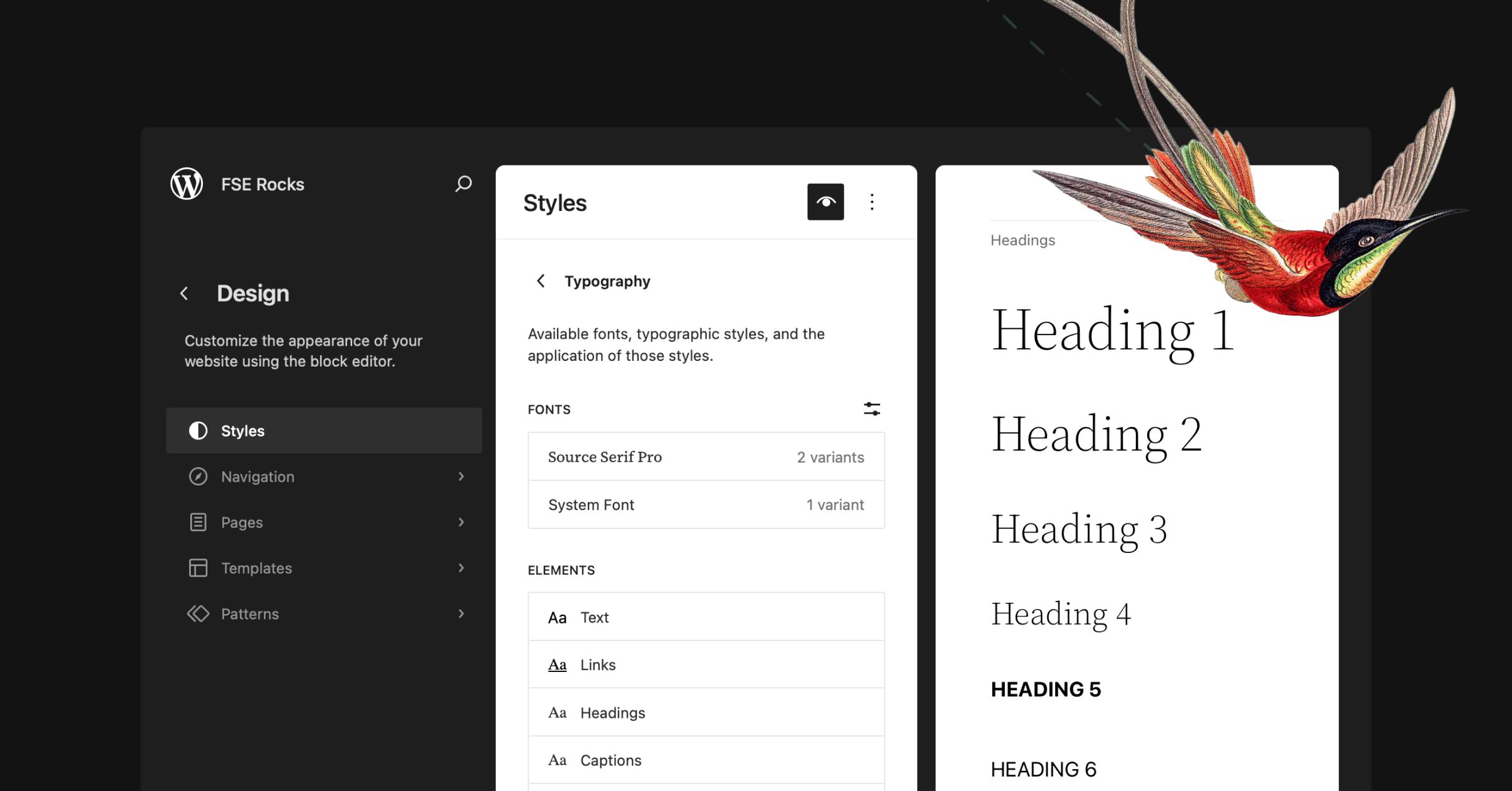
One of the most persistent sources of complexity in modern builds has been the assumption that even modest interactivity requires a full JavaScript application.
The Interactivity API offers a different path. WordPress now supports incremental enhancements where they are needed, without forcing teams into heavyweight frameworks or shipping an entire application to the browser. It is a more targeted, maintainable approach that aligns with how most organisations actually build.
Collaboration that keeps teams moving
Real time collaboration strengthens this integrated model further by keeping teams inside the CMS, reducing handoffs, increasing velocity, and encoding governance directly into workflows.
The editor becomes not just a place to assemble pages, but a shared environment where design systems, content structure, and team processes come together.
Why this matters now
Headless is not disappearing, but pure play headless has largely collided with reality. Many vendors that once dismissed visual editing are now scrambling to retrofit studios onto systems that were never designed for them.
WordPress, by contrast, has been building towards a hybrid future for years, and is now laying the groundwork for the next phase of intelligent, scalable digital publishing.
The opportunity in 2026 is not simply a better editor. It is a visual system that delivers integrated power without the complexity tax.
Go deeper
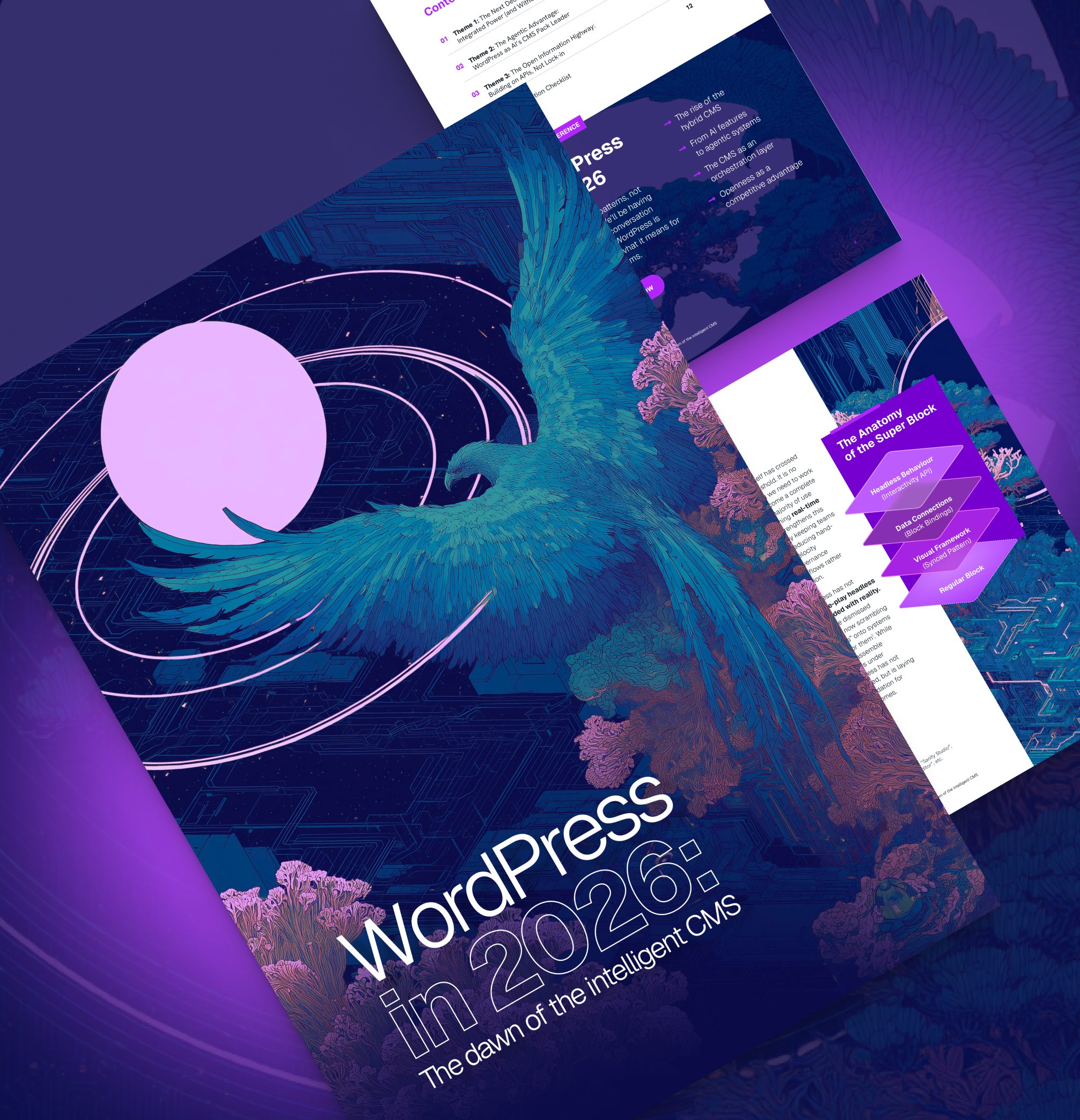
This post highlights just one of the shifts explored in our latest report, WordPress in 2026: The dawn of the intelligent CMS.
And if you would like to discuss these ideas with others shaping what comes next, join us at WP:26, our upcoming event on the future of WordPress and the intelligent CMS: