


By now, every enterprise has a position on ChatGPT. Most have piloted Copilot. A growing number are exploring how large language models fit into their product and operational strategies. But the most useful AI tools for enterprise teams in 2026 aren’t the ones making headlines.
While the boardroom conversation centres on the big platforms, a different category of AI tool is quietly solving the problems that actually slow enterprise teams down: the contract review that takes three days, the data question that requires a ticket to analytics, the video that never gets produced because editing is a bottleneck.
These aren’t experimental enterprise AI tools. They’re production-ready, security-conscious, and built for the specific workflows where general-purpose AI falls short. Here are five worth your attention.
1. Julius AI — Ask your data a question. Get an answer.
The problem it solves: Your team has the data. What they don’t have is a fast way to interrogate it without filing a request to analytics or wrestling with pivot tables.
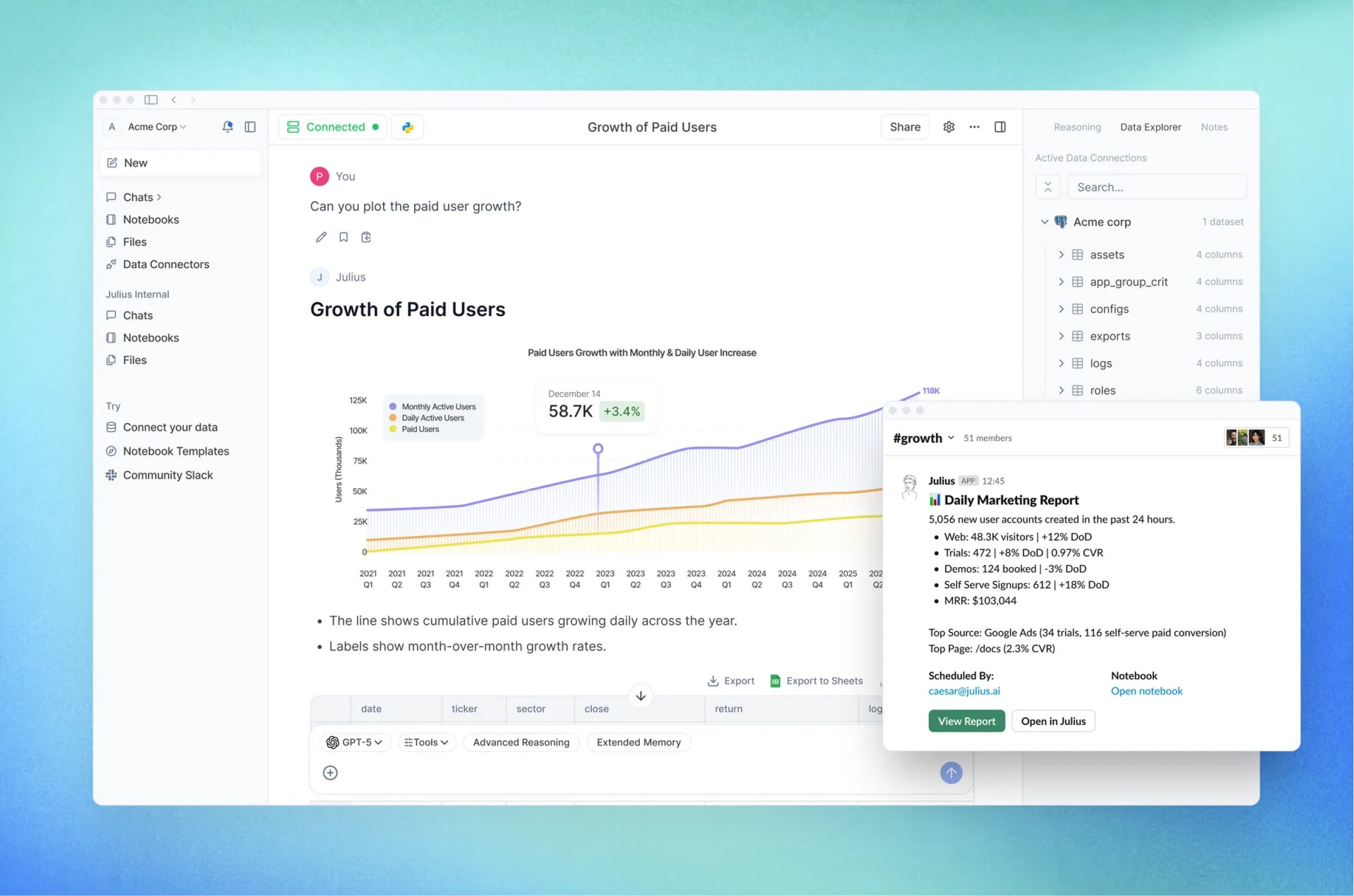
Julius lets anyone — marketing managers, operations leads, finance teams — upload a spreadsheet or connect a database and ask questions in plain English. “Which campaign had the highest ROI in Q3?” returns a chart in seconds, not a Jira ticket that takes a week.
Why enterprise teams should care: The gap between having data and acting on data is where most organisations bleed time. Julius closes it by making analysis conversational. Its “Notebooks” feature lets you build repeatable analysis workflows — run the same query on updated data with a single click. For teams producing regular reports, that alone can reclaim hours every month.
It won’t replace your data science function, but it will dramatically reduce the number of questions that need to reach them.
Price: Free (limited) / from $20/mo
Website: julius.ai
2. Gumloop — AI-powered workflow automation, no engineering queue required
The problem it solves: You’ve identified dozens of processes that could benefit from AI — classifying support tickets, extracting data from documents, enriching CRM records — but every one of them is stuck behind an engineering backlog.
Gumloop is a drag-and-drop builder that connects any major LLM (GPT-4, Claude, Gemini) to your internal tools: CRMs, document stores, email, web scrapers — without writing code. Think of it as what happens when you cross Zapier with an AI reasoning layer.
Why enterprise teams should care: The real bottleneck in enterprise AI adoption isn’t the model — it’s the integration. Gumloop lets operations teams build and iterate on AI workflows without waiting for developer resources. Process documents, classify inbound requests, update records, extract structured data — all in visual workflows that non-technical team members can own.
It’s already used by teams at Instacart and Shopify. The platform provides access to premium LLMs out of the box, so you don’t need to manage your own API keys to get started.
Price: Free / from $37/mo
Website: gumloop.com
3. Spellbook — AI contract review that works where your lawyers already work
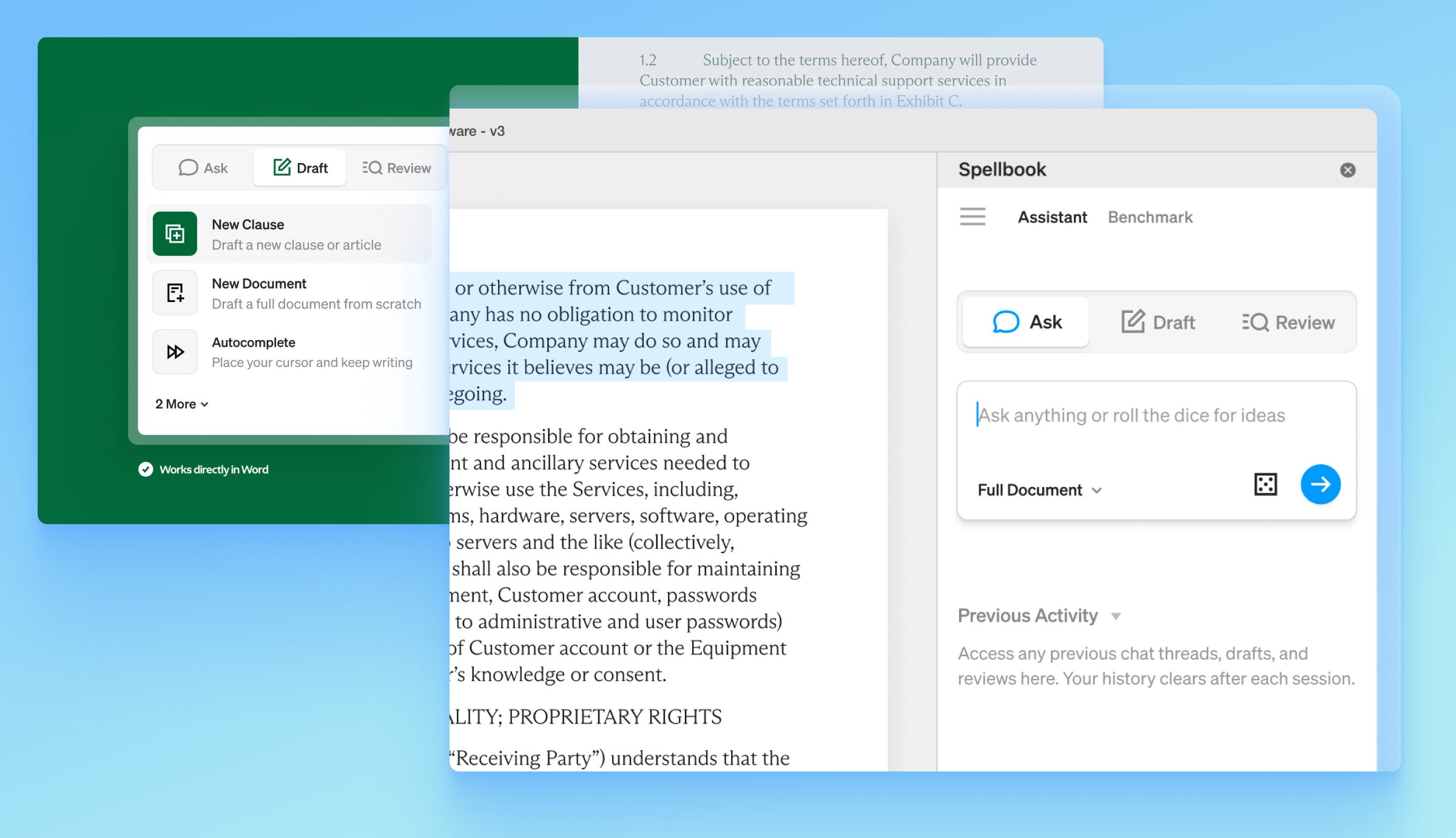
The problem it solves: Contract review is slow, expensive, and scales badly. Most AI legal tools require copying text into a separate interface. Spellbook works directly inside Microsoft Word.
It reviews contracts, suggests language, identifies missing clauses, flags risks, and handles redlining — all within the document itself. Critically, it understands legal language semantically, not just through keyword matching, which means it catches issues that a simple search would miss.
Why enterprise teams should care: Over 3,400 law firms and in-house teams already use Spellbook. It’s SOC 2 Type II certified with zero data retention — the security posture enterprise legal and procurement teams require.
For organisations that process a high volume of contracts — vendor agreements, NDAs, partnership terms — the time savings compound quickly. And because it sits inside Word, adoption friction is minimal. There’s nothing new to learn; the AI meets your team in their existing workflow.
Price: Free trial / subscription-based
Website: spellbook.legal
4. Descript — Video production without the production bottleneck
The problem it solves: Your team knows video content is essential — for training, marketing, internal communications — but the editing process creates a bottleneck that means most footage never gets published.
Descript turns video editing into text editing. Upload a video, get an AI transcription, then edit the video by editing the transcript. Delete a sentence from the text, the video cut happens automatically. Remove every “um” and filler word with a single click. Rearrange sections by moving paragraphs.
Why enterprise teams should care: The real barrier to enterprise video production isn’t recording — it’s post-production. Descript means anyone who can edit a document can edit a video. That fundamentally changes who in the organisation can produce and ship video content.
The Overdub feature takes it further: clone a speaker’s voice and fix mistakes or add sentences by typing them. Mispronounced a product name in an otherwise perfect take? Type the correction. For distributed teams where reshoots are impractical, this is a genuine operational advantage.
Price: Free / from $24/mo
Website: descript.com
5. Reclaim.ai — AI calendar management that scales across teams

The problem it solves: In any enterprise with distributed teams, calendar management is an invisible productivity drain. Meeting overload crowds out focused work. Scheduling across time zones consumes hours. And “protected time” is only protected until the next urgent invite.
Reclaim automatically schedules and defends time for deep work, meetings, habits, and breaks — then dynamically adjusts when priorities shift. Mark focused work as high priority, and it will actively reschedule lower-priority blocks to protect it from incoming meeting requests.
Why enterprise teams should care: This isn’t a scheduling link tool. It’s an AI layer over your calendar that understands priorities and makes trade-offs on your behalf. For leadership teams and project managers juggling complex schedules across time zones, the compounding time savings are significant.
It integrates with Google Calendar, Slack, Asana, Jira, and Linear. For organisations already invested in these ecosystems, Reclaim slots in without adding another platform to manage.
Price: Free / from $10/mo
Website: reclaim.ai
The pattern worth noticing
These five enterprise AI tools share something important: none of them are trying to be a general-purpose AI assistant. Each one targets a specific enterprise workflow — data analysis, process automation, legal review, content production, time management — and solves it with a depth that horizontal platforms can’t match.
That’s the real shift happening in enterprise AI right now. The competitive advantage isn’t in which LLM you’ve chosen. It’s in how precisely you’ve matched specialised tools to the workflows where your teams actually lose time.
The tools everyone’s heard of are table stakes. The ones that solve your specific bottlenecks? That’s where the value compounds.
Learn more about where AI is heading and the difference it’ll make to your teams.
