

Downloadable guide: Market analysis
WordPress in 2025
The definitive enterprise guide.
WordPress is transforming the enterprise landscape like never before. From getting ahead of market trends to capitalising on innovative features, this guide unpacks how enterprise users can get the most out of WordPress in 2025.
This form may not be visible due to adblockers, or JavaScript not being enabled.
Ad blockers may block the form from loading. If you can’t disable your ad blocker, please contact us at hello@humanmade.com.
Why WordPress should be on your 5-year roadmap
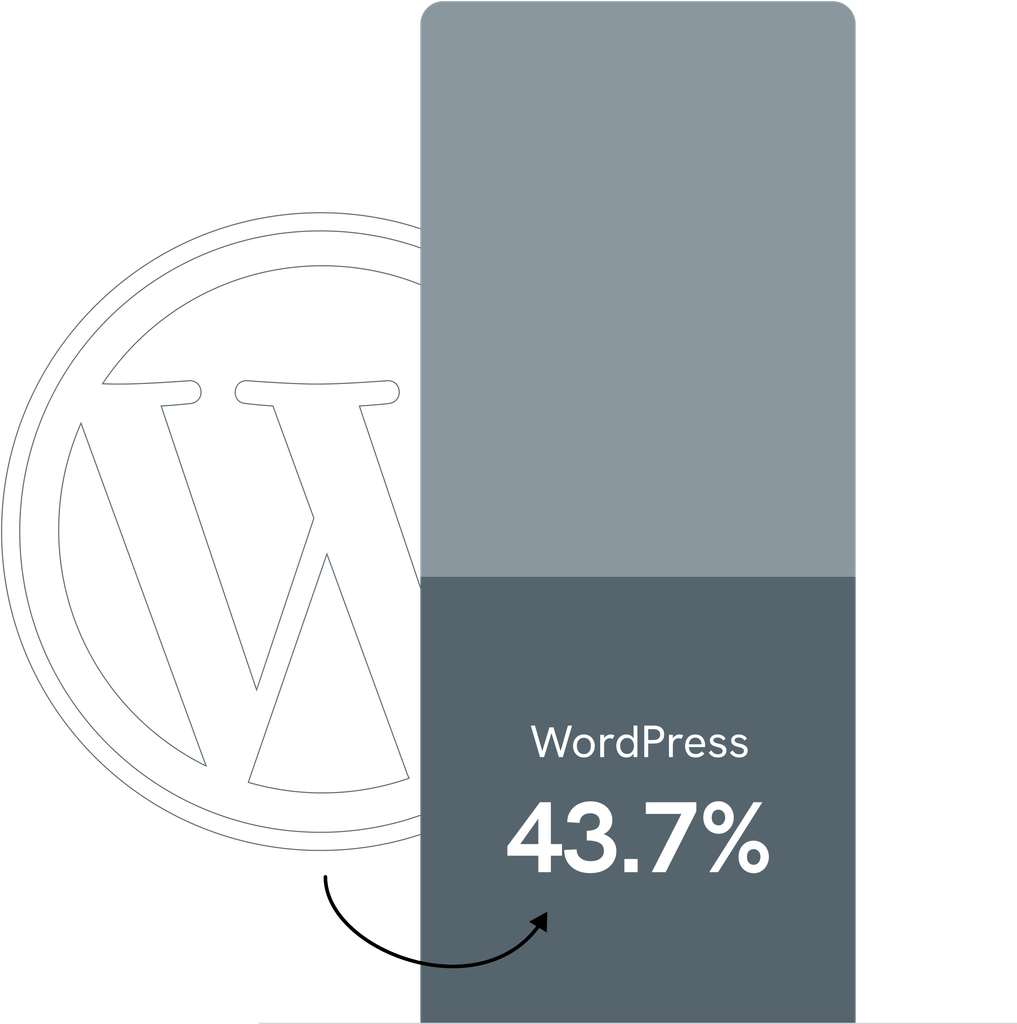
Amidst market turmoil, WordPress is emerging stronger than ever. Holding 43.7% market share, WordPress isn’t just a legacy CMS, it’s the most dominant on the web today. In this guide, learn to:
- Take advantage of open source innovation
- Empower teams with the most advanced no-code editor
- Explore novel AI uses and applications
- Create the best of both worlds with hybrid-headless experiences
- Gain a competitive edge as an enterprise first-mover
Cut through the hype and learn how enterprise organisations can leverage WordPress and open-source for innovation, competitive advantage, and more.

What’s next for WordPress in 2025?
Explore the future of WordPress for the year ahead with key insights from Noel Tock, our CGO at Human Made. Backed by industry data and real-world enterprise projects, this market analysis highlights:
- Emerging CMS trends, including growth figures of WordPress’ Block Editor and Full-Site Editing
- Sectors and enterprise brands who are reshaping their platform with WordPress
- AI Orchestrator possibilities for streamlined workflows
- Four ways to maximise WordPress in 2025
Latest and Greatest
Read our latest blog articles
Learn the latest and greatest in WordPress site building. We’re offering tutorials, tips and tricks, and video walkthroughs on our blog.
-

Why enterprise brands are backing WordPress in 2026

Our recent event, WP:26, was a deep dive into the future—and I was completely fired up to see us gather technologists, publishers, and platform leaders to explore the key patterns shaping WordPress in 2026 and beyond. We packed an afternoon full of talks and discussions, covering the massive impact of AI, accessibility, enterprise publishing, and…
-
WP:26: Patterns shaping WordPress in 2026

When we started planning WP:26, we kept returning to one question: What patterns are emerging that will shape WordPress in 2026 and beyond? The CMS landscape is changing quickly. AI is transforming how teams work. Expectations around accessibility and performance are rising. Enterprise organisations are rethinking how their digital platforms evolve over time. By the…
-
WordPress as an agentic platform

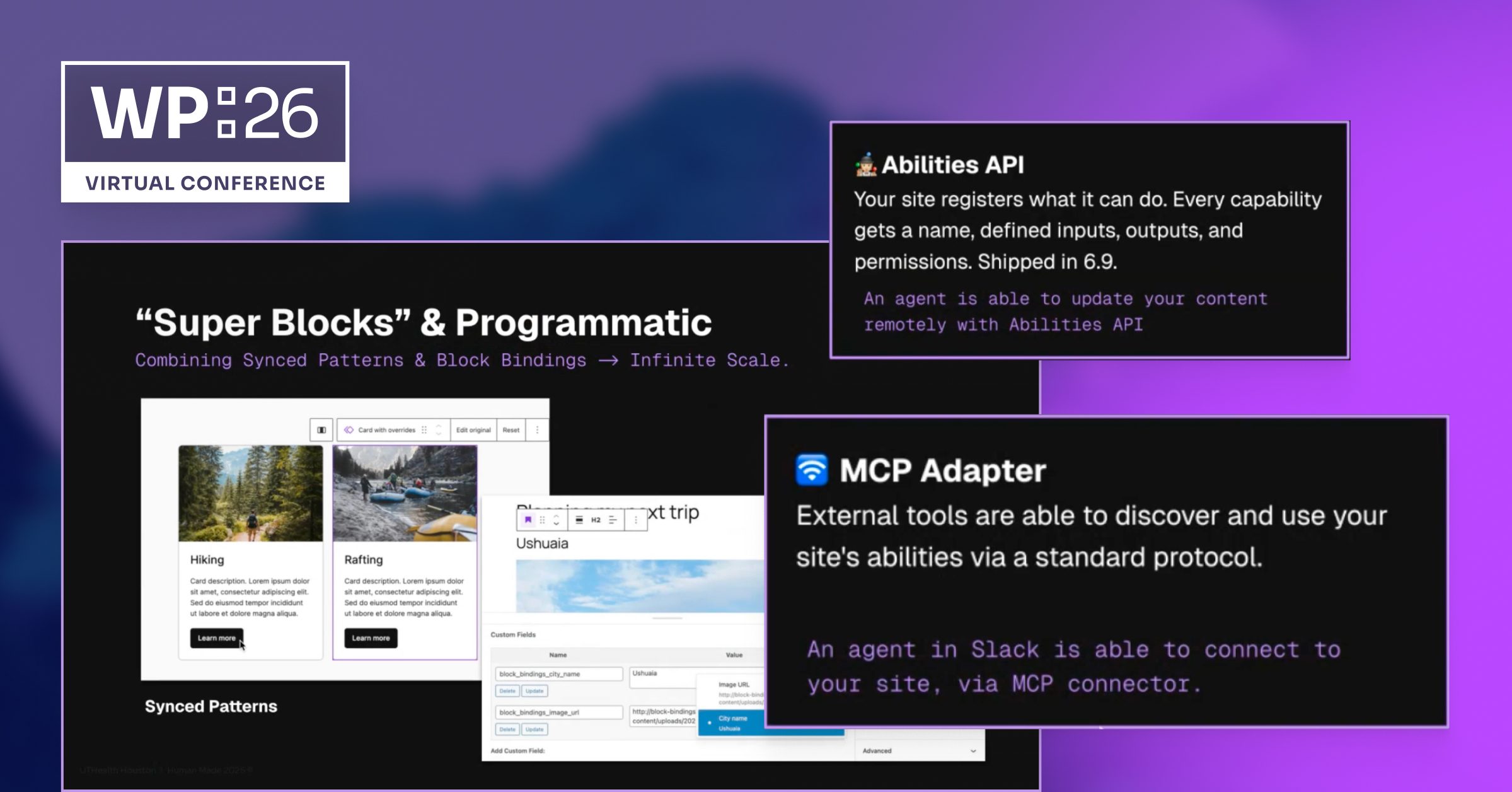
At WP:26, Human Made’s virtual event exploring the future of WordPress, we brought together technologists, publishers, and platform leaders to discuss one big question: What patterns are emerging that will shape WordPress in 2026 and beyond? Across a day of talks and conversations, speakers explored how AI, accessibility, enterprise publishing, and evolving web standards are…