



Accessibility often enters the conversation through the lens of compliance. Laws like the ADA or the European Accessibility Act make it non-negotiable. But compliance is only the beginning. Teams that treat accessibility as a strategic investment discover benefits that reach far beyond legal risk.
Accessibility drives performance, efficiency, and growth: the same outcomes every digital leader is trying to achieve.
Here’s how accessibility can unlock business advantage.
1. Accessibility improves conversion and retention
When a site is accessible, it reduces friction for every visitor. Accessible design is simply good design: faster, clearer, and easier to act on.
Consider these examples:
- Forms that work with keyboard navigation also convert better on mobile.
- Descriptive link text improves comprehension, which in turn supports SEO and click-through.
- Readable contrast ratios reduce bounce rates by making content easier to scan in all lighting conditions.
A study by the UK’s Click-Away Pound project found that inaccessible sites cost British retailers £17 billion each year in lost revenue. The logic is simple: when people can use your site, they stay, buy, and return.
Takeaway: Every accessibility improvement increases usability, which directly impacts conversions and customer loyalty.
2. Accessibility lowers technical debt
Accessibility often feels expensive because teams try to add it after launch. Retrofitting fixes into an existing product is the real cost driver.
When accessibility is built in from the start — during design systems, component creation, and content workflows — it prevents common issues that later require developer rework.
Accessibility standards like semantic HTML, ARIA roles, and clear focus states also make code cleaner and easier to maintain. Teams gain long-term efficiency by removing ambiguity and duplication.
Takeaway: Accessibility built early saves both time and money later. It’s a form of quality assurance that protects future budgets.
3. Accessibility strengthens your brand and customer trust
Accessibility sends a clear signal about your organisation’s values. It tells people that inclusion is part of your culture, not a campaign.
Customers increasingly choose brands that reflect their ethics. Inclusive design and accessible experiences demonstrate respect for diverse audiences and reinforce trust — particularly important for sectors where credibility is key, like finance, healthcare, and higher education.
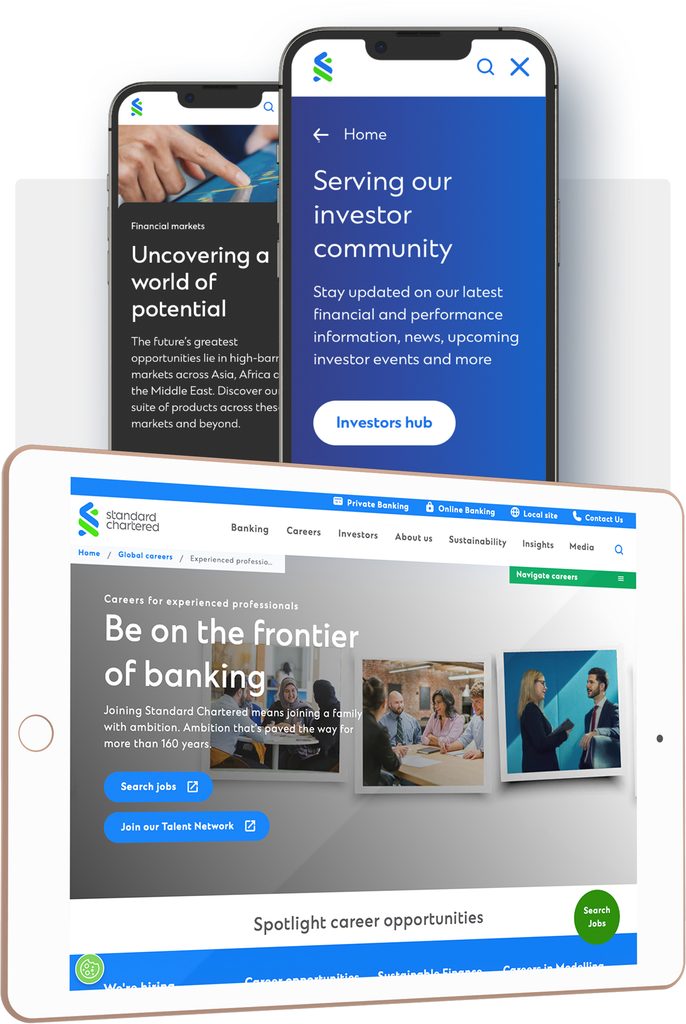
Human Made’s work with Standard Chartered is a strong example. Accessibility was treated as a global design principle across multiple markets and languages. The outcome was not only compliance but a more consistent user experience for every customer.
Takeaway: Accessibility builds trust at scale. It’s an investment in brand equity as much as technical capability.
4. Accessibility helps teams scale responsibly
Enterprise WordPress environments can span hundreds of sites, each with different editors, themes, and plugins. Without a shared accessibility standard, quality becomes inconsistent.
Embedding accessibility into design systems and governance models brings control and predictability. Reusable, accessible components make it easier for distributed teams to deliver consistent results without starting from scratch each time.
This also supports compliance across regions with differing regulations — a growing challenge for global organisations.
Takeaway: Accessibility governance creates efficiency and consistency across complex ecosystems.
5. Accessibility fuels innovation
Constraints are often where creativity begins. Designing for accessibility encourages teams to think differently about interaction, language, and structure.
Voice interfaces, dark-mode design, and responsive layouts all originated from accessibility thinking. Today, AI-driven captioning, pattern recognition, and alt-text generation are continuing that trend.
Teams that treat accessibility as a driver of innovation discover better solutions for all users — not just those with specific needs.
Takeaway: Accessibility challenges assumptions and leads to better digital products.
Building a culture of accessibility
At Human Made, we believe accessibility is a marker of maturity. It reflects how a company approaches design, development, and content creation as a unified practice.
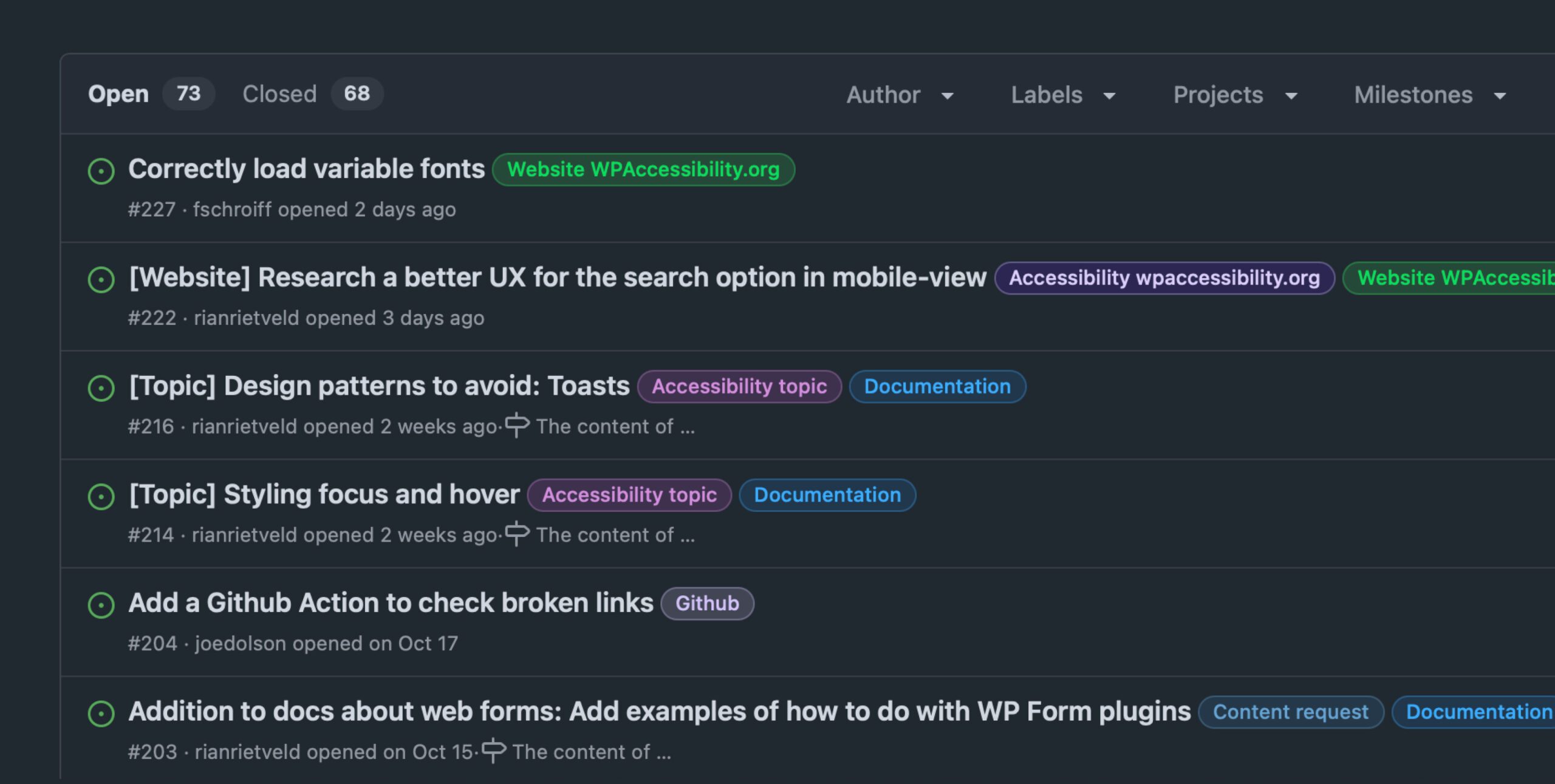
That’s why we’re sponsoring accessibility specialist Rian Rietveld to create the WordPress Accessibility Knowledge Base, a central resource that will make accessibility knowledge easier to find and apply across the ecosystem.
Accessible design is not a compliance task. It’s an operational advantage — one that makes digital experiences faster, cleaner, more consistent, and more inclusive.
Take action:
Start by auditing one site, one workflow, or one component library. Identify the quick wins — like colour contrast, form labels, or keyboard navigation — and build from there.
Every improvement you make strengthens your platform. Why wait to unlock the business advantage accessibility can bring?