



AI pilots for enterprise platforms are easy to start.
A team picks a tool, tests a few prompts, generates summaries, drafts metadata, experiments with search, or explores content recommendations. Results arrive quickly. The demo looks promising. Everyone can see the potential.
Then the harder questions begin.
How does this fit into existing workflows? Which content can AI access? Who reviews the output? How are prompts managed? Can different teams use different models without creating chaos? What happens when the preferred provider changes? How do you maintain quality, governance, and compliance as usage grows?
This is where many enterprise AI initiatives start to slow down.
The issue is rarely a lack of enthusiasm. Most organisations have no shortage of ideas about where AI could create value. The challenge comes when those ideas need to move beyond experimentation and become part of day-to-day operations.
For AI to deliver sustained value, it needs to connect with the systems where content, data, publishing decisions, and governance already live. That makes enterprise platform strategy an increasingly important part of the AI conversation.
AI needs more than a tool layer
Many organisations begin with AI tools that sit outside their core publishing environment.
That works well for early experimentation. Editors can generate copy. Marketing teams can test campaign ideas. Product teams can explore personalisation concepts. The results are often useful, particularly for isolated tasks.
At enterprise scale, that model introduces friction.
Content gets copied between systems. Outputs are stored inconsistently. Teams develop their own standards and processes. Valuable work happens, but it becomes difficult to repeat, govern, and improve.
AI adoption becomes far more effective when it is woven into the platform itself.
Within WordPress, AI can sit directly inside the editorial experience. Teams can generate summaries, suggest headlines, enrich metadata, apply taxonomy, and support content updates without leaving the workflows they already use every day.
The benefits extend beyond efficiency.
Because the output remains connected to structured content, it can be reused across multiple parts of the platform. Metadata can support personalisation. Taxonomy can improve discoverability. Content summaries can enhance search and recommendation experiences. Archive analysis can inform editorial planning.
AI becomes part of the content lifecycle rather than a separate activity.
The real opportunity sits in workflow
The conversation around AI often focuses on content generation.
For enterprise organisations, the more interesting opportunities are often operational.
Large content archives contain years of institutional knowledge. Editorial teams spend significant time maintaining taxonomy, metadata, and content quality. Publishers need ways to surface relevant content, identify gaps, and improve discoverability across growing estates.
These are all areas where AI can provide meaningful support.
Content can be analysed at scale. Relationships between topics, entities, and audiences can be identified more easily. Metadata can be maintained more consistently. Editorial teams can spend less time on repetitive tasks and more time on activities that require judgement, expertise, and creativity.
The common thread running through these use cases is integration.
AI needs access to content, context, workflows, and permissions. It needs to operate within systems that already support how teams publish, review, approve, and manage content.
This is where platform flexibility becomes important.
WordPress gives organisations an open foundation for building the workflows they need. It integrates with analytics platforms, customer data platforms, DAMs, search services, personalisation tools, and AI providers. It supports traditional publishing models alongside headless, hybrid, and composable architectures.
That flexibility allows organisations to adopt AI in ways that fit their existing operations rather than forcing teams to adapt to a predefined model.
Governance becomes more important as adoption grows
AI introduces new responsibilities alongside new opportunities.
Accuracy, bias, quality, data handling, brand consistency, and compliance all require attention. Early experiments can often be managed informally. Enterprise adoption demands a more structured approach.
Teams need visibility into where AI is being used and how outputs move through the publishing process. Editorial standards need to remain consistent. Sensitive content and regulated information need appropriate controls.
These requirements are often easier to address when AI sits inside existing workflows.
WordPress already supports role-based permissions, approval processes, and editorial governance. Those foundations make it easier to introduce AI without losing oversight. Review stages, auditability, and workflow controls can become part of the implementation from the outset rather than being added later.
That balance between flexibility and governance becomes increasingly valuable as adoption expands across teams and regions.
Why WordPress is well positioned for AI adoption
The pace of AI development creates a challenge for enterprise organisations.
New models emerge constantly. Existing providers release new capabilities at remarkable speed. Teams are still discovering where AI creates the greatest value and which workflows benefit most from automation.
Few organisations want to commit themselves to a single provider or a fixed approach while the landscape continues to evolve.
This is one reason open platforms are attracting renewed attention.
WordPress has always been valued for its extensibility, ecosystem, and ability to integrate with wider technology stacks. Those qualities are becoming increasingly relevant as AI becomes part of everyday digital operations.
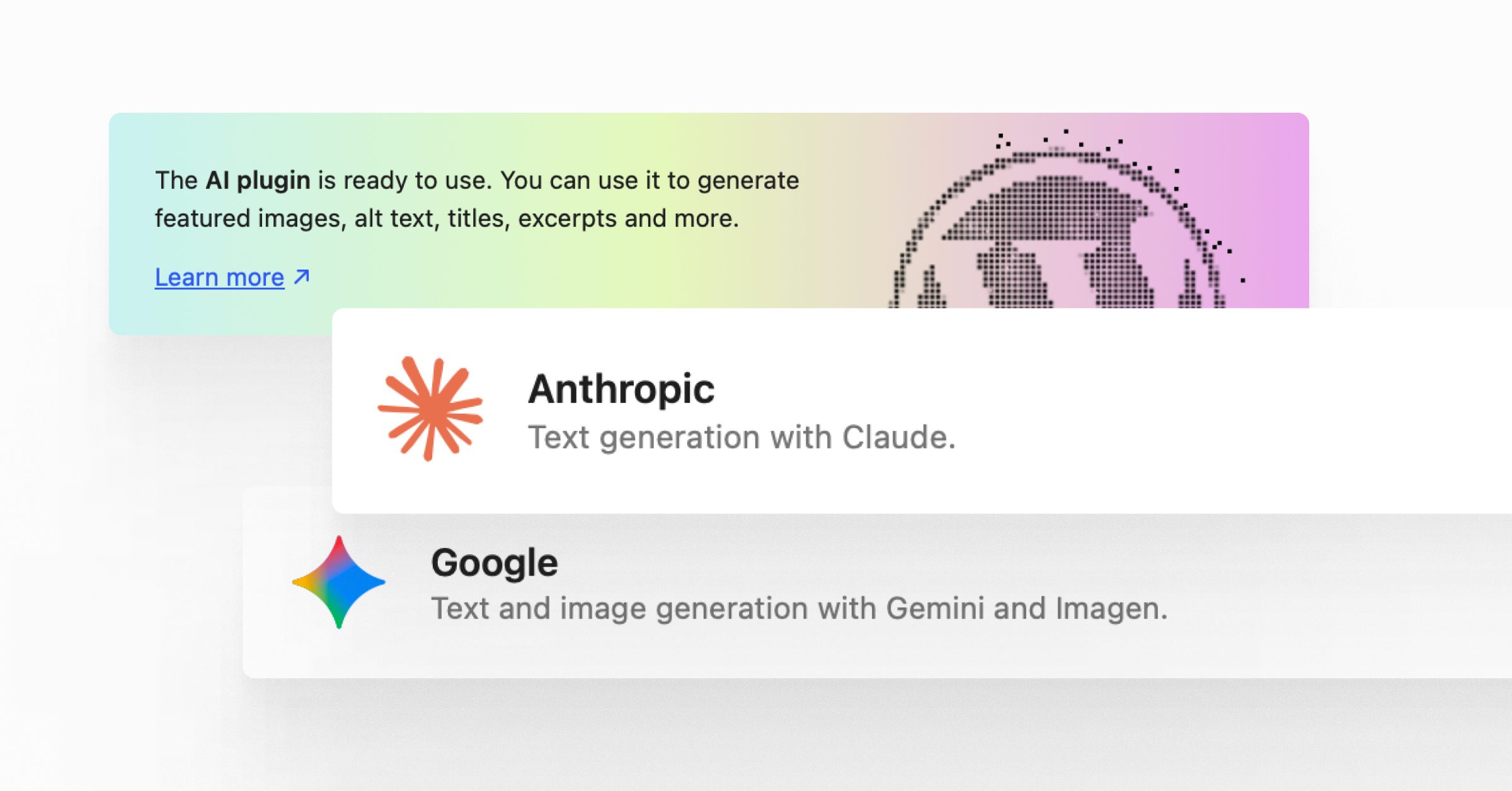
Recent developments such as the AI Client initiative are helping standardise how AI services connect into WordPress. That creates opportunities for more consistent, governable, and flexible AI-powered workflows across publishing, content operations, search, personalisation, and automation.
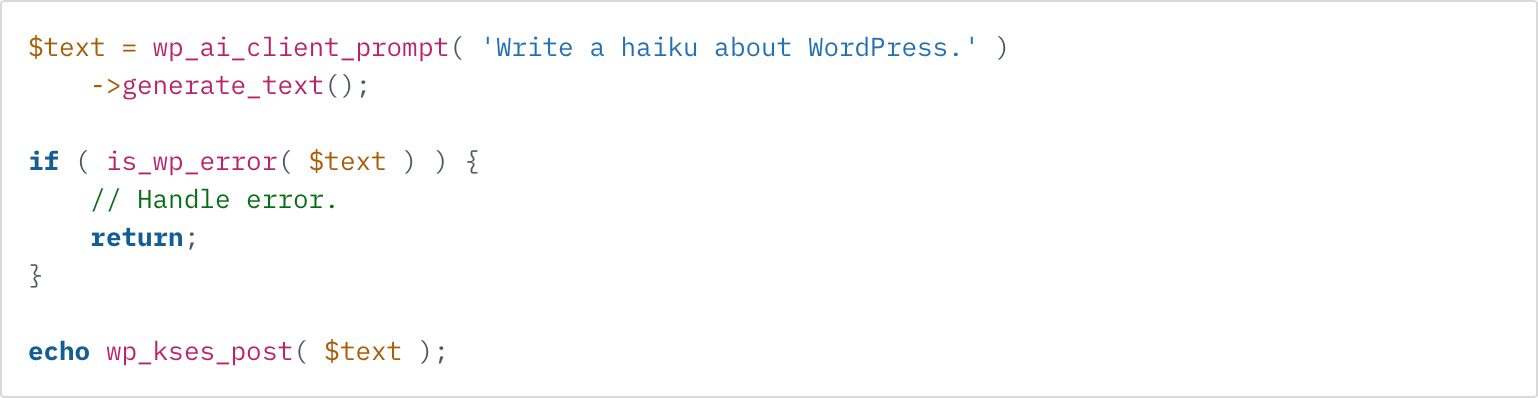
It also points towards a broader shift in how enterprise platforms operate. As AI capabilities mature, platforms will increasingly support workflows that are more autonomous, more connected, and more context-aware. Organisations that build on flexible foundations today will be better positioned to take advantage of those developments as they emerge.
Building for what comes next
Enterprise AI adoption is still in its early stages.
Many organisations are experimenting with use cases, testing different models, and exploring where AI can create the greatest value. At the same time, platform teams are making decisions that will influence how easily those capabilities can be adopted in the future.
Those decisions touch architecture, governance, content operations, integrations, security, and developer experience. They influence how quickly teams can experiment, how easily successful initiatives can scale, and how much flexibility remains as technology continues to evolve.
This is why platform strategy has become such an important part of the AI conversation. Organisations are not simply evaluating tools. They’re creating the conditions that allow those tools to deliver value over time.
WordPress is increasingly well positioned for that role. Its open architecture, growing AI ecosystem, and ability to integrate with wider enterprise technology stacks make it a strong foundation for organisations navigating a period of rapid change.
This article is adapted from The Enterprise WordPress Playbook, our strategic guide to scaling, governing, and future-proofing digital platforms with WordPress.
Download the playbook to explore AI-powered workflows, composable architecture, governance, security, performance, and the decisions shaping the next generation of enterprise WordPress platforms.
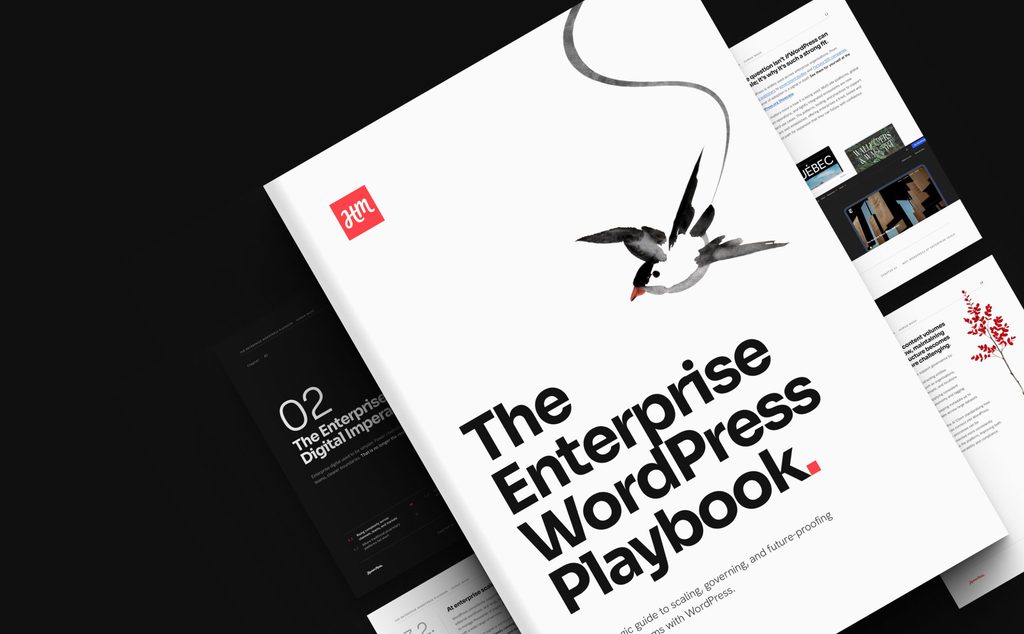
This article is adapted from The Enterprise WordPress Playbook, our strategic guide to scaling, governing, and future-proofing digital platforms with WordPress.
Download the playbook to explore AI-powered workflows, composable architecture, governance, security, performance, and the decisions shaping the next generation of enterprise WordPress platforms.