


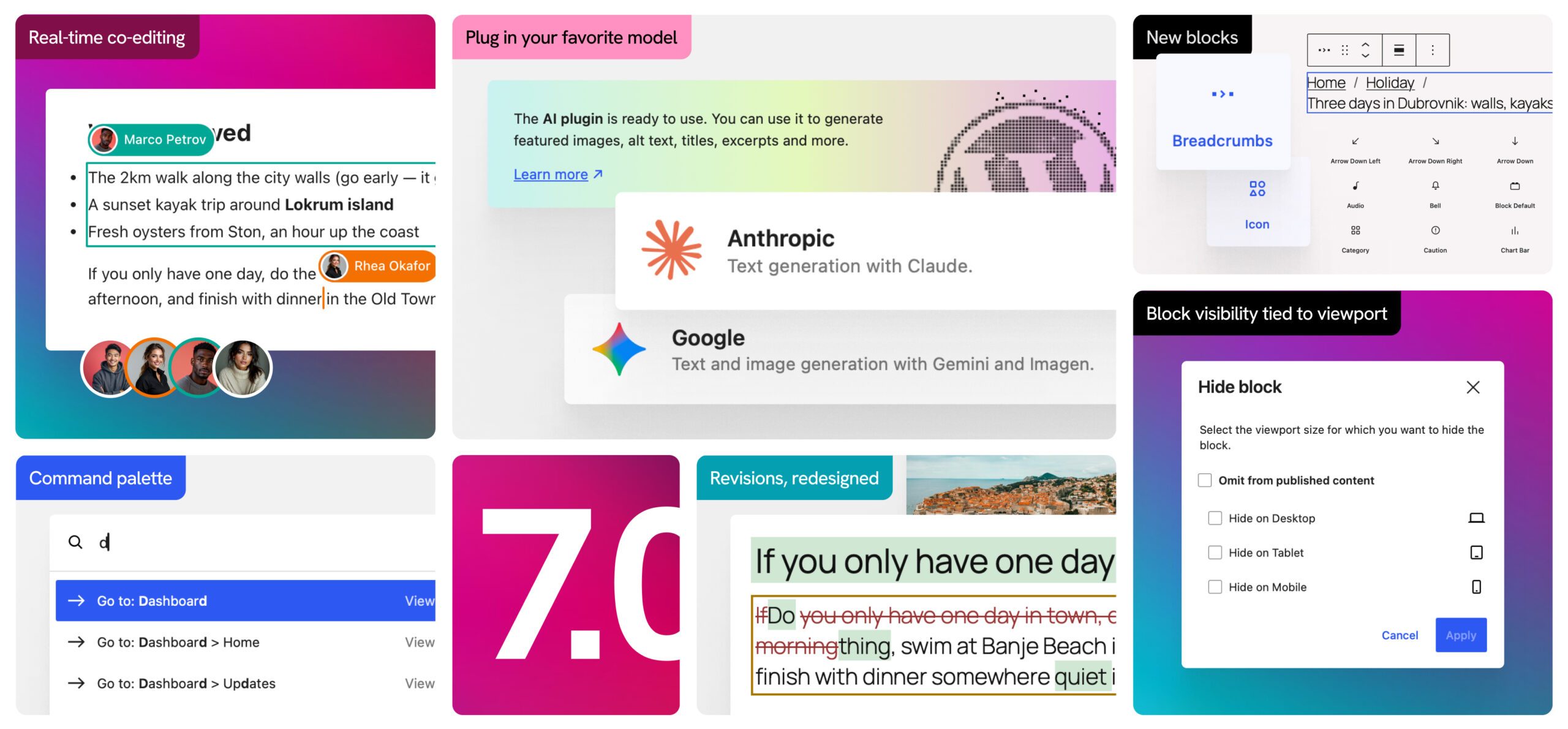
After a couple of delays, WordPress 7.0 is scheduled to land on May 20th.
We’re looking at this through the lens of the beta releases and recent core updates, so some details may still shift. But the overall direction is already clear, and it’s one enterprise teams have been waiting for.
This is the release where WordPress starts to feel like it’s designed for how large organisations actually run.
A platform that’s catching up with how it’s used
Enterprise teams have been stretching WordPress to fit complex needs for years. Governance, consistency, performance, multi-team workflows, all solved through a mix of plugins, custom code, and process.
It works well, but it comes at a cost.
What’s happening in 7.0 is a gradual pullback of that complexity into core. The platform is starting to take responsibility for problems teams have been solving themselves for a long time.
That shift is where the real value is.
The editor finally behaves like a controlled environment
One of the most important changes in 7.0 is also one of the least visible.
The editor is now always iframed.
That brings a level of consistency that has been hard to guarantee across environments. Styles are properly isolated. What you see in the editor is far closer to what gets rendered on the front end, without unexpected bleed from themes or admin styles.
For teams running large platforms, this is a big step forward.
There is some cleanup involved. Older plugins and custom integrations that rely on direct access to the global document will need updating. But once that’s done, the editing experience becomes much more predictable.
And predictability is what scales.
Design systems start to hold their shape
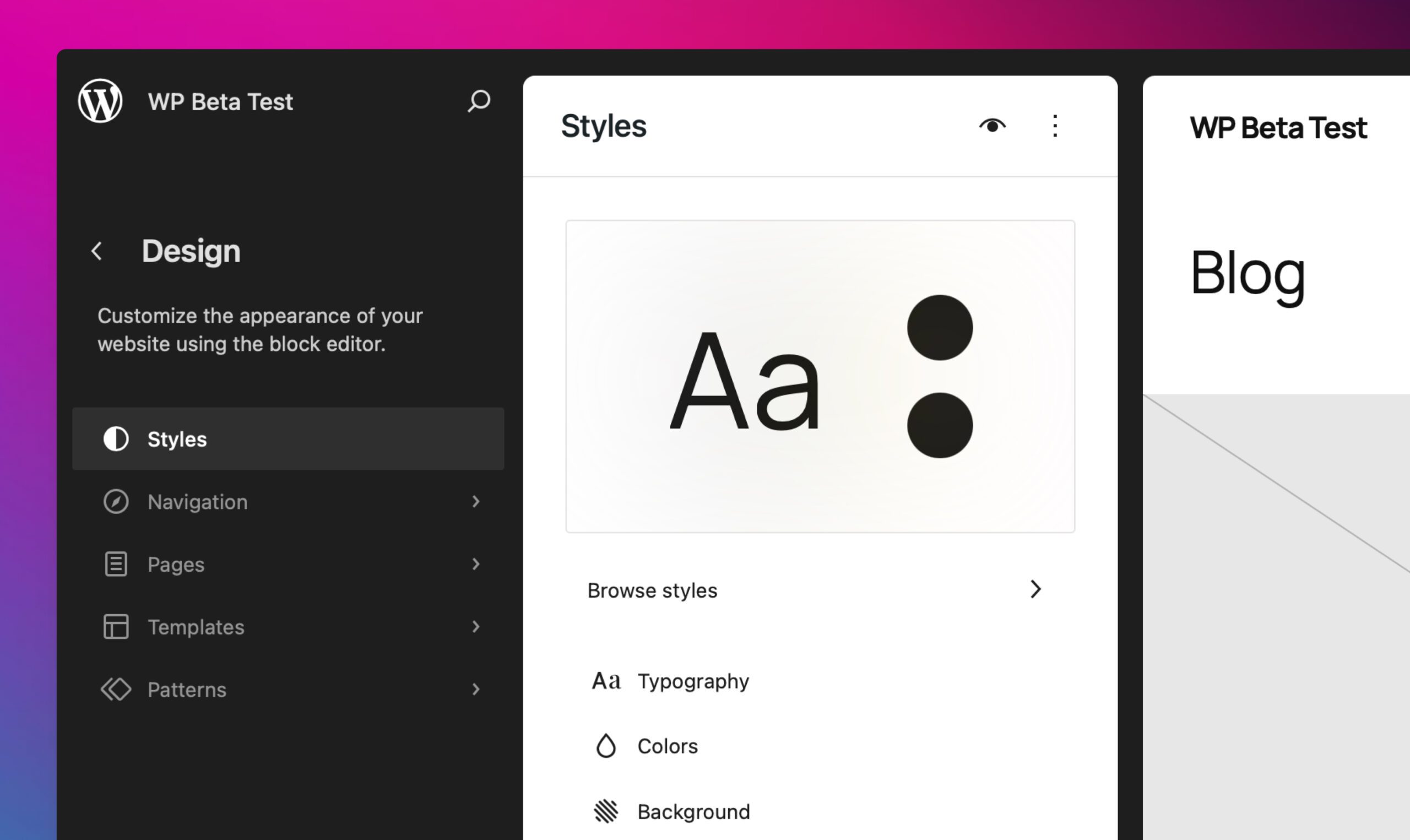
Keeping content consistent across teams, regions, and brands is where things usually start to drift.
Building on the leaps forward in WordPress 6.9, WordPress 7.0 gives teams better tools to keep that under control without slowing anyone down.
Templates are clearer about what can and can’t be changed. Patterns are easier to treat as reusable, governed components. Block-level controls behave more reliably across different contexts.
All of that adds up to a system that reinforces the design system instead of relying on people to remember it.
For engineering teams, it means fewer edge cases and less defensive code. For content teams, it means fewer accidental breakages and a smoother path to publishing.
Governance gets simpler
If you’ve ever had to manage permissions and workflows across a large editorial team in WordPress, you’ll know how quickly things can get complicated.
Plugins help, but they also introduce more moving parts.
WordPress 7.0 improves the baseline here. Permissions are more flexible, ownership is clearer, and a lot of the common governance needs can be handled without reaching straight for additional tooling.
That doesn’t remove the need for custom workflows in complex organisations, but it does reduce how much of that logic sits outside core.
Fewer dependencies, fewer surprises when it comes time to upgrade.
Performance that keeps up with modern builds
Block-based sites are powerful, but they can get heavy fast.
7.0 includes improvements that target that complexity directly. Rendering is more efficient, assets are loaded more selectively, and caching behaves more consistently.
These are the kinds of changes that don’t always show up in screenshots but make a real difference in production.
For high-traffic platforms, it means more stable performance without as much ongoing tuning. For teams, it means less time chasing regressions and more time building.
Developer experience is moving in the right direction
There are a few updates in the recent developer notes that are worth paying attention to.
Block visibility tied to viewport opens up new ways to handle responsive behaviour directly in the editor. That changes how content models are designed and reduces reliance on front-end-only solutions.
Per-block custom CSS is also coming into play. Useful, but something teams will want to manage carefully to avoid introducing inconsistency at scale.
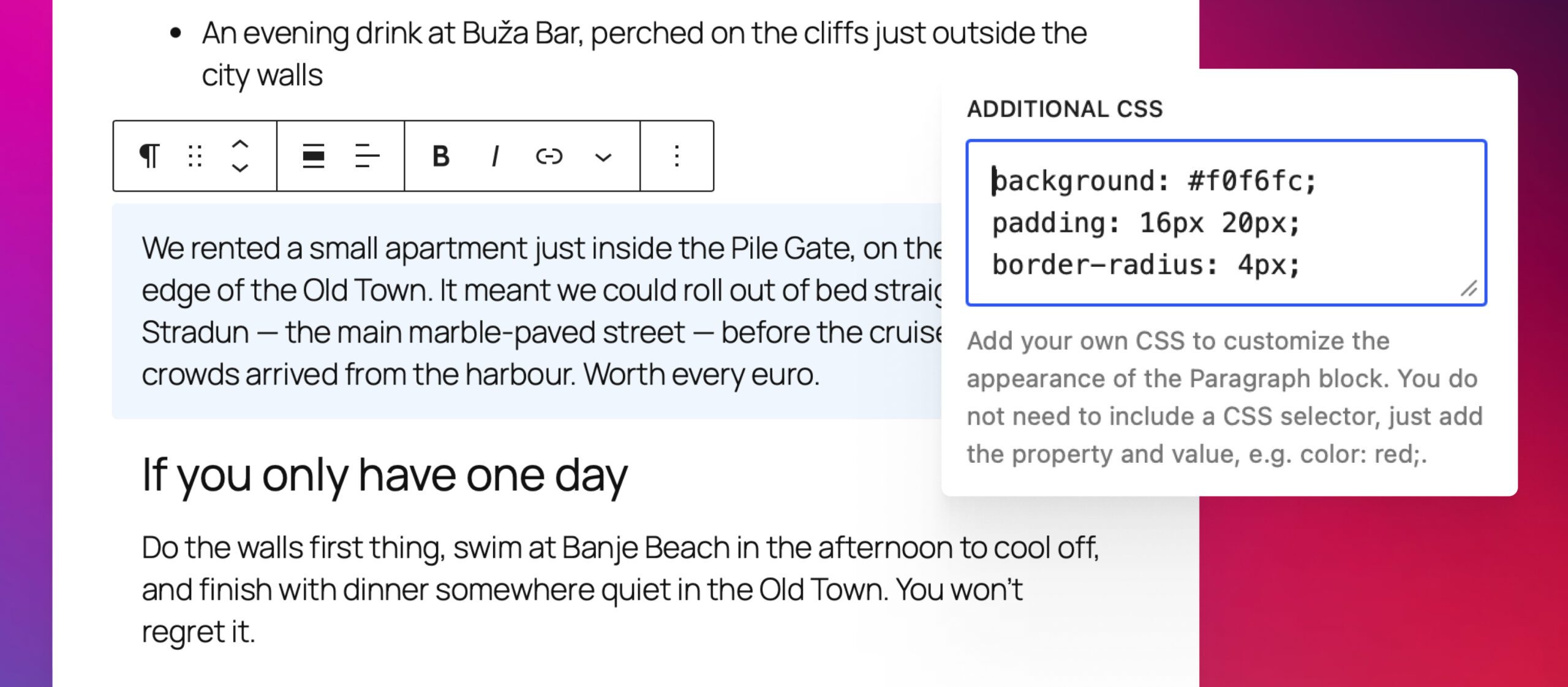
The common thread is that more capability is moving into the block layer. That’s powerful, but it also means teams need to think more deliberately about how they govern it.
A better fit for modern architectures
Most enterprise platforms aren’t running WordPress in isolation.
They’re integrating with front-end frameworks, personalisation tools, analytics platforms, and more. In that world, consistency in data and APIs is essential.
7.0 continues to make progress here. Block data is easier to work with, API responses are more predictable, and the gap between what editors create and what developers consume keeps getting smaller.
For headless and hybrid setups, that reduces friction across the board.
WordPress 7.0: What to look at before May 20th
With the release just around the corner, now is the time to start testing.
A few areas worth focusing on:
- Editor integrations
Check anything that interacts directly with the editor environment, especially where it touches the DOM. - Design system enforcement
Look at how templates and patterns are used today and where core features can take over. - Permissions and workflows
Review your governance model and see what can be simplified. - Performance on complex pages
Test the pages that tend to cause problems and see how they behave on the latest beta. - Plugin compatibility
Pay close attention to plugins that interact with the admin or editor experience.
Where this leaves enterprise WordPress
WordPress has been running enterprise platforms for a long time. What’s changing with WordPress 7.0 is how much effort it takes to keep things running well.
More of the patterns that teams have built around WordPress are now becoming part of the platform itself. That reduces duplication, lowers maintenance overhead, and makes upgrades less of a balancing act.
There’s still work to do, especially for platforms with a lot of legacy customisation. But once that alignment is in place, the payoff is a system that’s easier to manage and more predictable over time.
That’s a meaningful step forward.