


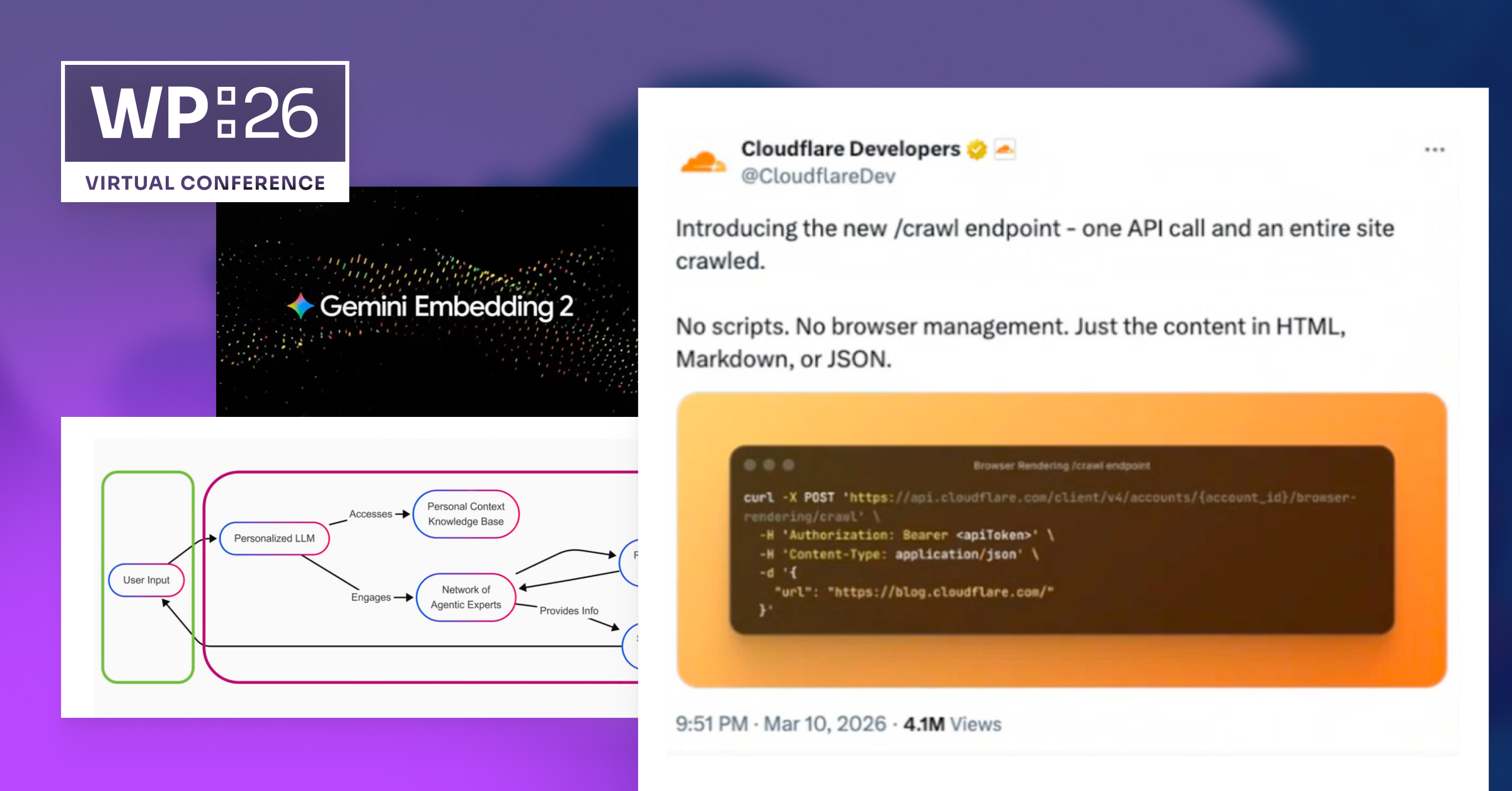
On 12 March 2026, WP:26 assembled the brightest minds in the WordPress ecosystem to explore the trends actively redefining the platform. From AI-driven workflows and the agentic web to accessibility and the future of search, we went beyond the surface to unpack what’s changing and what it means for building with WordPress at scale.
One of the most insight-packed sessions came from Alex Moss, Principal SEO at Yoast, who provided a focused examination of the search landscape’s rapid evolution.
From SEO to AI Search Optimisation: Catch up on the replay of the session and read on to get the strategic takeaways from our essential WP:26 session on AI’s impact.
Throwing off the shackles of buzzwords and new acronyms, Alex delivered a clear and focused take on how the arrival of AI has fundamentally impacted search, content discoverability, and content strategy for all of us. Across an insight-packed 30-minutes, he guided us through where the industry has been, what’s happening right now, what the future might look like, and—crucially—what actionable steps enterprise teams can take today.
Read on to get the key moments and insights from Alex’s session.
The generative shift: from clicks to decisions
The native search experience has been disrupted by Large Language Models (LLMs), moving from a list of 10 links to a model of retrieval and generation that delivers conversational, contextual, and increasingly personalised answers. The focus for publishers is now shifting from maximising clicks to driving decisions and selections via AI agents.
The rise of GEO (Generative Engine Optimisation)
Alex introduced GEO, defining it as:
“optimising content for generative AI search environments, like LLM-powered engines to make it discoverable, trustworthy, and authoritative.” – Alex Moss, Principal SEO at Yoast.
The key takeaway? “Good SEO is good GEO”, because the core principles correlate.
Actionable strategy: The four pillars for SEOs
Alex detailed the four crucial areas to focus on this year, including:
- Editorial standards: Mediocre content will not survive. Content must be unique and human-driven, but it must also be machine-readable (e.g., concise conclusions, proper headings, lists, evidence, and citations).
- Discoverability and EEAT: The goal is to assist the AI agent in synthesising the answer. This structural shift requires adherence to the EEAT framework (experience, expertise, authority, trust) to ensure your brand is validated by the system.
- Data integrity: Structured data is more important than ever. Technologies like Yoast Schema Aggregation and Cloudflare’s /crawl endpoints are emerging to allow LLMs to ingest an entire site’s structured data at once, leading to greater efficiency and fewer hallucinations.
- Success Metrics: Clicks and impressions are becoming less valuable. Discovery is the new valuable metric, and SEOs need to update their reporting to track how the brand is being seen and cited across different LLMs.
“If you’re one of those companies where if I go to the about page and read three sentences and I still don’t know what you do, that’s for the human. That’s not for the machine. Make sure that everything’s machine readable and make sure that everything’s concise, everything is structured well.” – Alex Moss, Principal SEO at Yoast.