


The 2025 State of Enterprise WordPress report offers one of the clearest pictures yet of how large organisations are using WordPress to deliver at scale. The findings reveal a platform maturing in capability, broadening in adoption, and steadily gaining influence inside enterprise technology stacks. For teams navigating digital strategy, this year’s report provides valuable insight into what is working, where investment is growing, and how leaders are thinking about the future of their CMS ecosystems.
Here are the five takeaways that matter most.
1. Enterprise adoption is deepening across sectors and regions
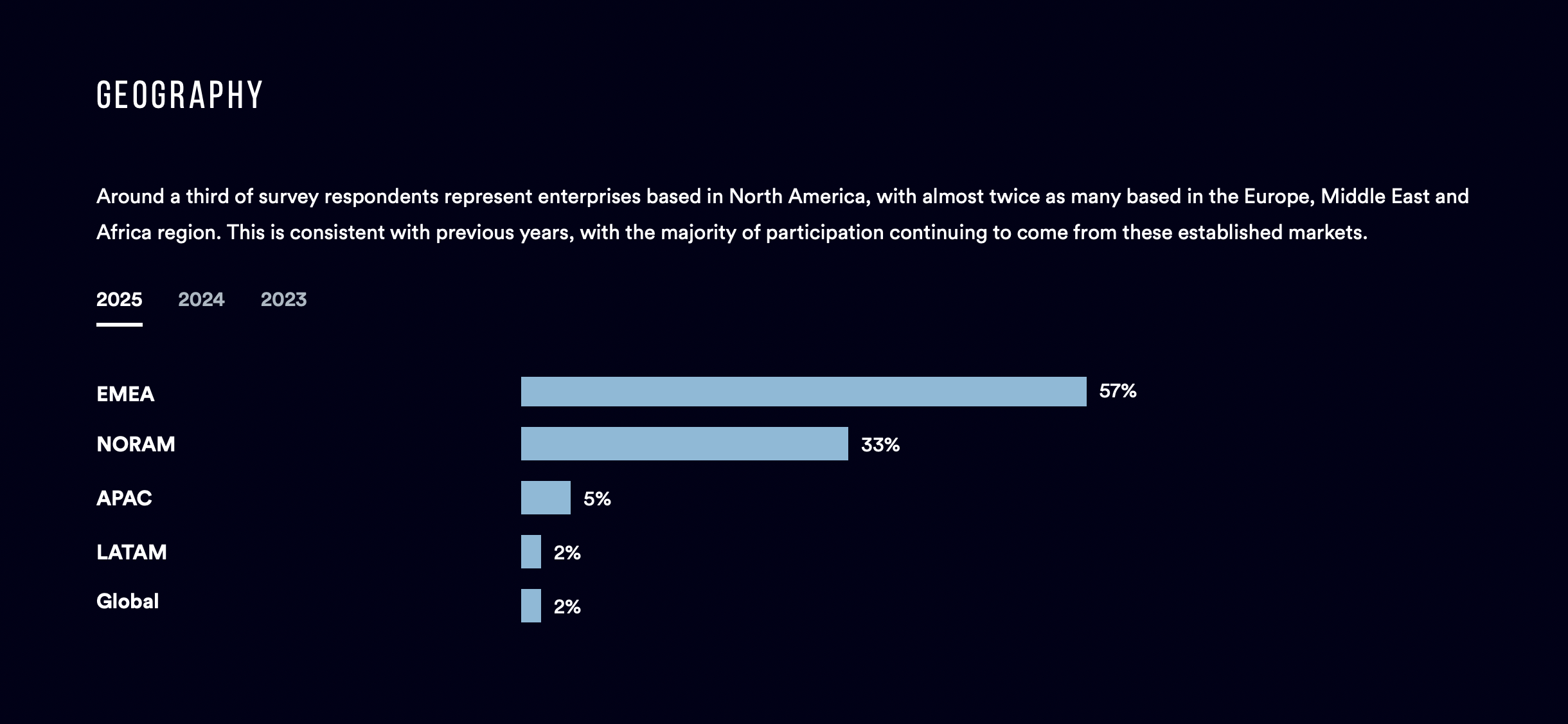
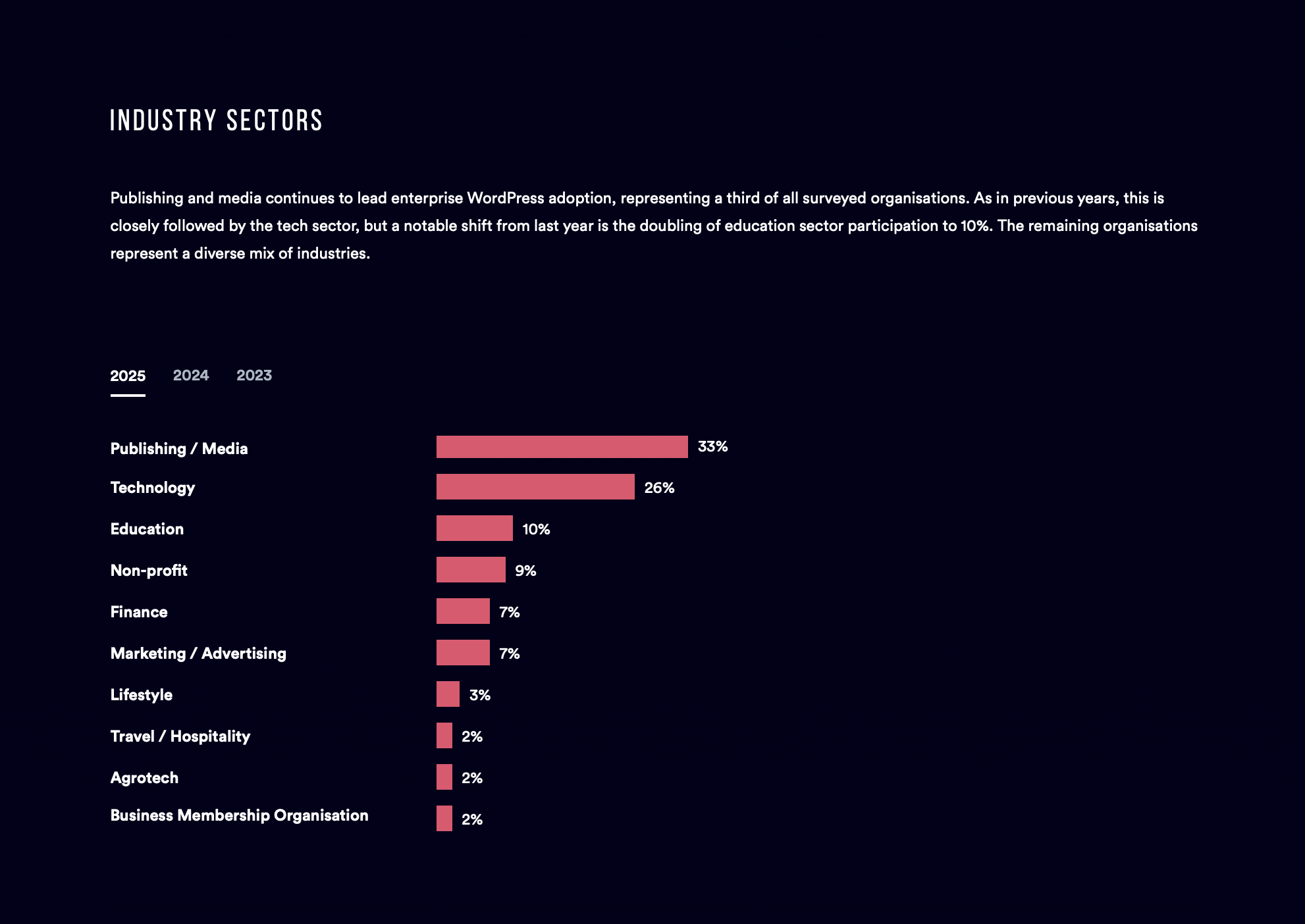
WordPress is not only well established in the enterprise; it’s diversifying. Participation in the survey shows strong representation from media and technology, but also rising engagement from education, non-profit, and a wider mix of commercial sectors.
Organisations are also reporting far higher traffic volumes than in previous years. A growing share now serves more than ten million unique visitors each month. This shift signals confidence in the platform’s performance profile and a recognition that WordPress can anchor large scale digital estates.
2. The block editor is now the default way enterprises create and manage content
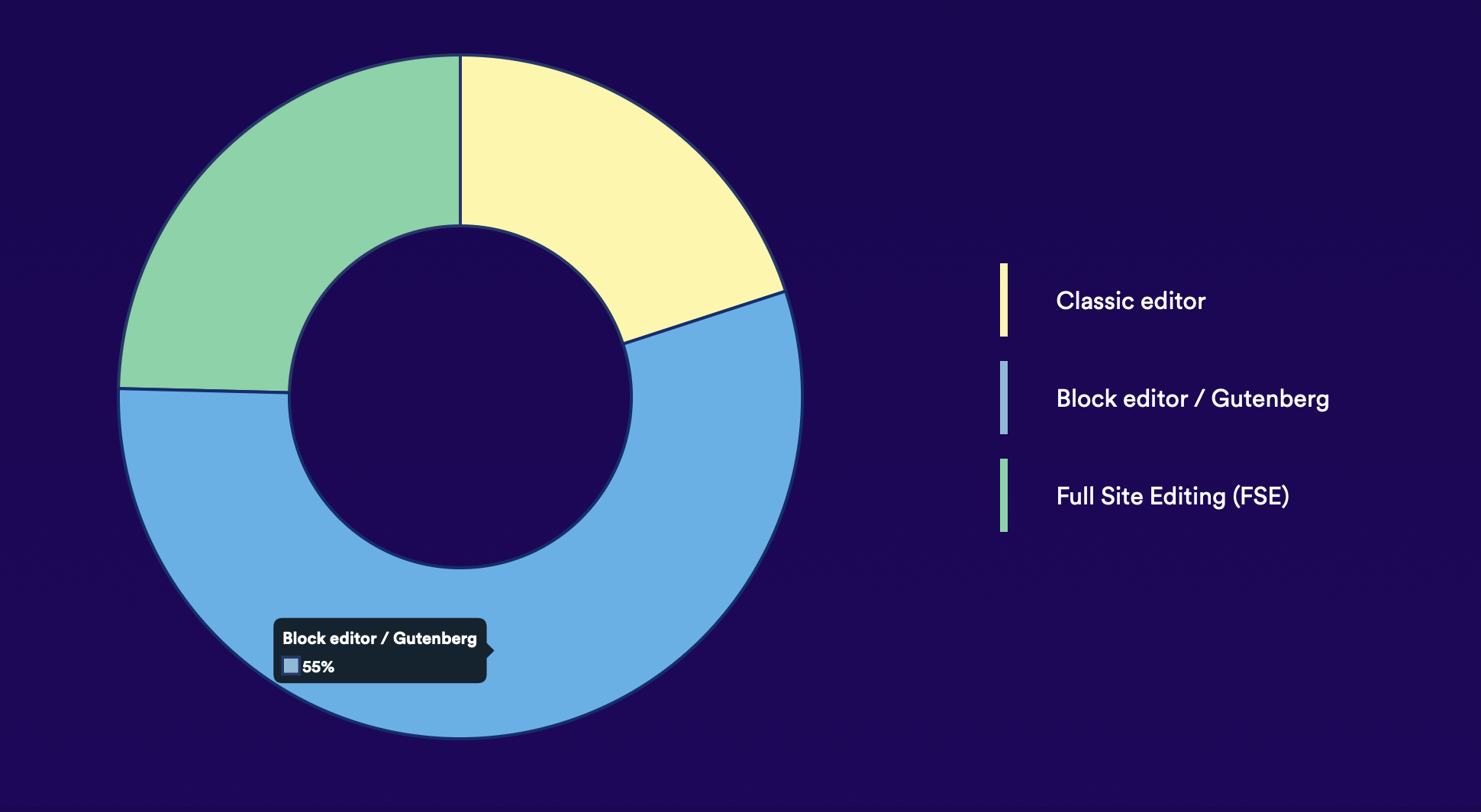
More than eighty percent of respondents are using the block editor in production. Teams report that it makes content creation significantly easier and supports more flexible workflows across large editorial groups. Daily usage of WordPress has also increased, which suggests that the editor experience is maturing in ways that genuinely support high output teams. As more organisations embrace block based workflows, the expectations for modular, reusable, and collaborative content operations continue to rise.
3. Headless adoption is expanding as organisations seek greater technical flexibility
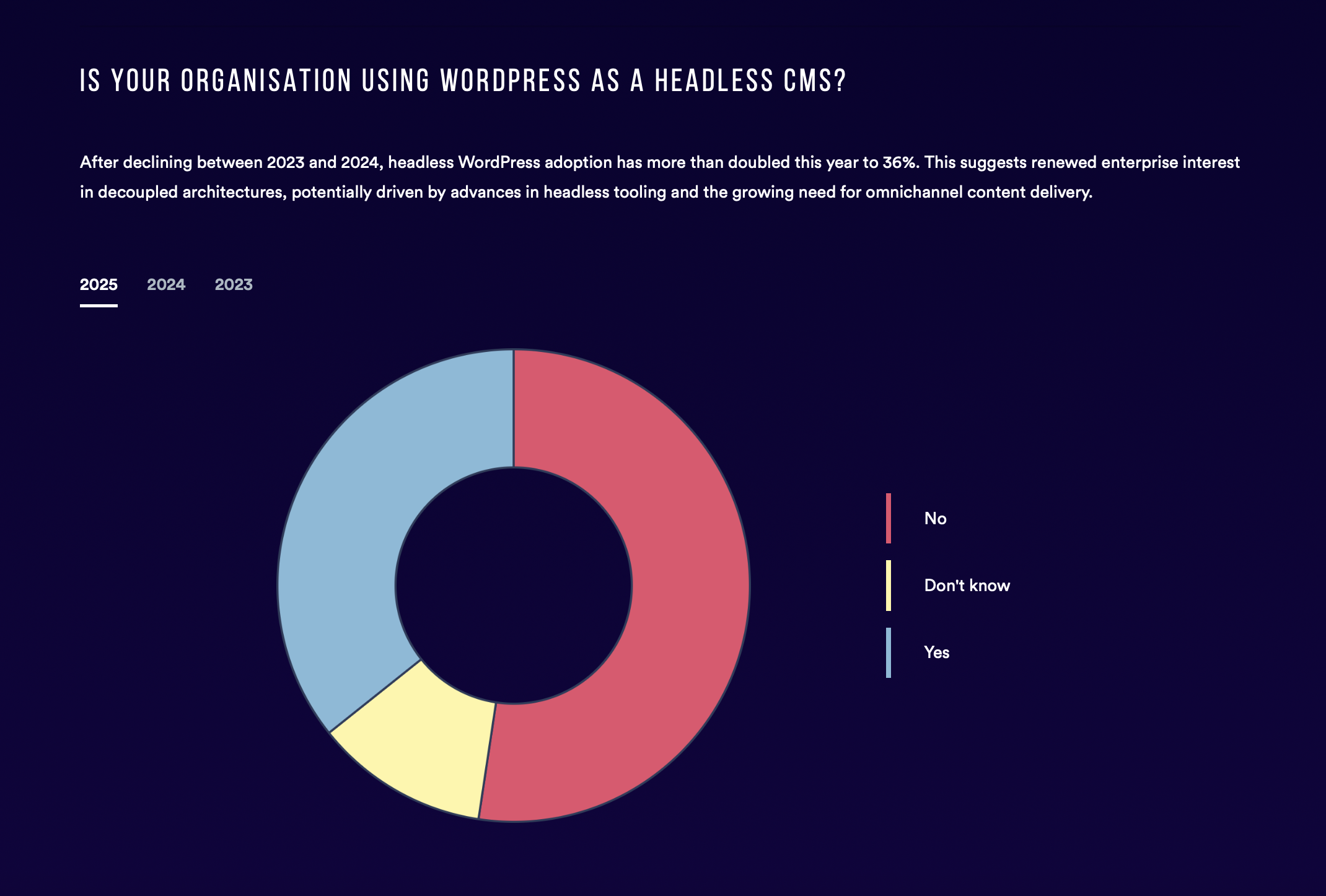
Use of WordPress as a headless CMS more than doubled this year. The shift reflects a growing desire for decoupled architectures that support multi platform experiences, high performance front ends, and more specialised engineering choices. WordPress remains at the centre of the content layer, yet is increasingly paired with modern frameworks and custom delivery channels. For enterprises managing complex digital estates, the ability to choose the right tool for each part of the stack has become a major advantage.
4. Open source contribution is becoming a strategic priority
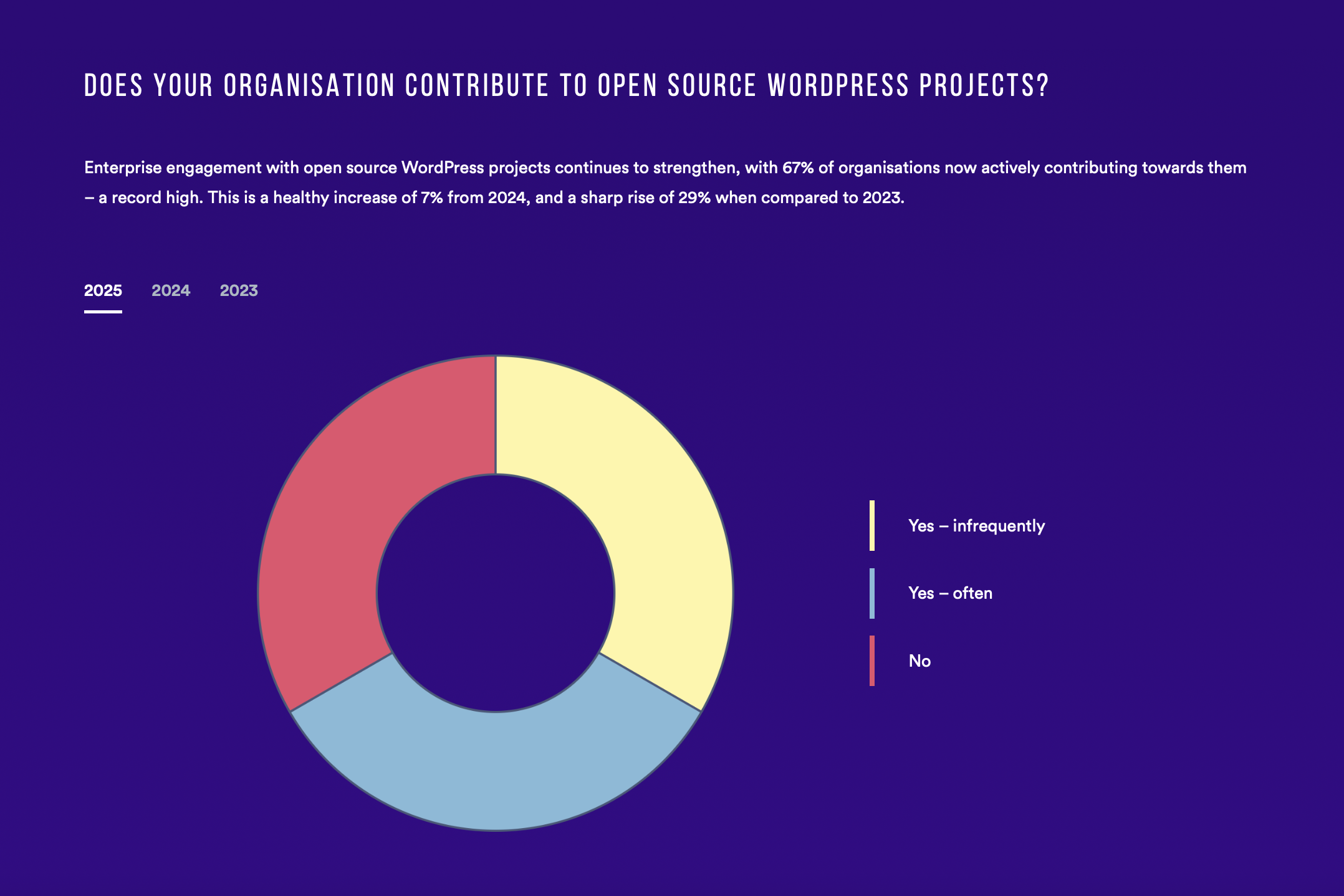
Two thirds of surveyed organisations now contribute to WordPress in some form. This is the highest level of participation ever recorded in the report. Large scale users are recognising that investing in the ecosystem is essential for long term stability, better tooling, and a healthier platform. Contribution is no longer viewed as a nice to have: it’s becoming part of responsible digital stewardship. Enterprises that shape the tools they rely on gain a more resilient and cost effective foundation for the future.
5. WordPress continues to win as a strategic choice rather than a cost saving measure
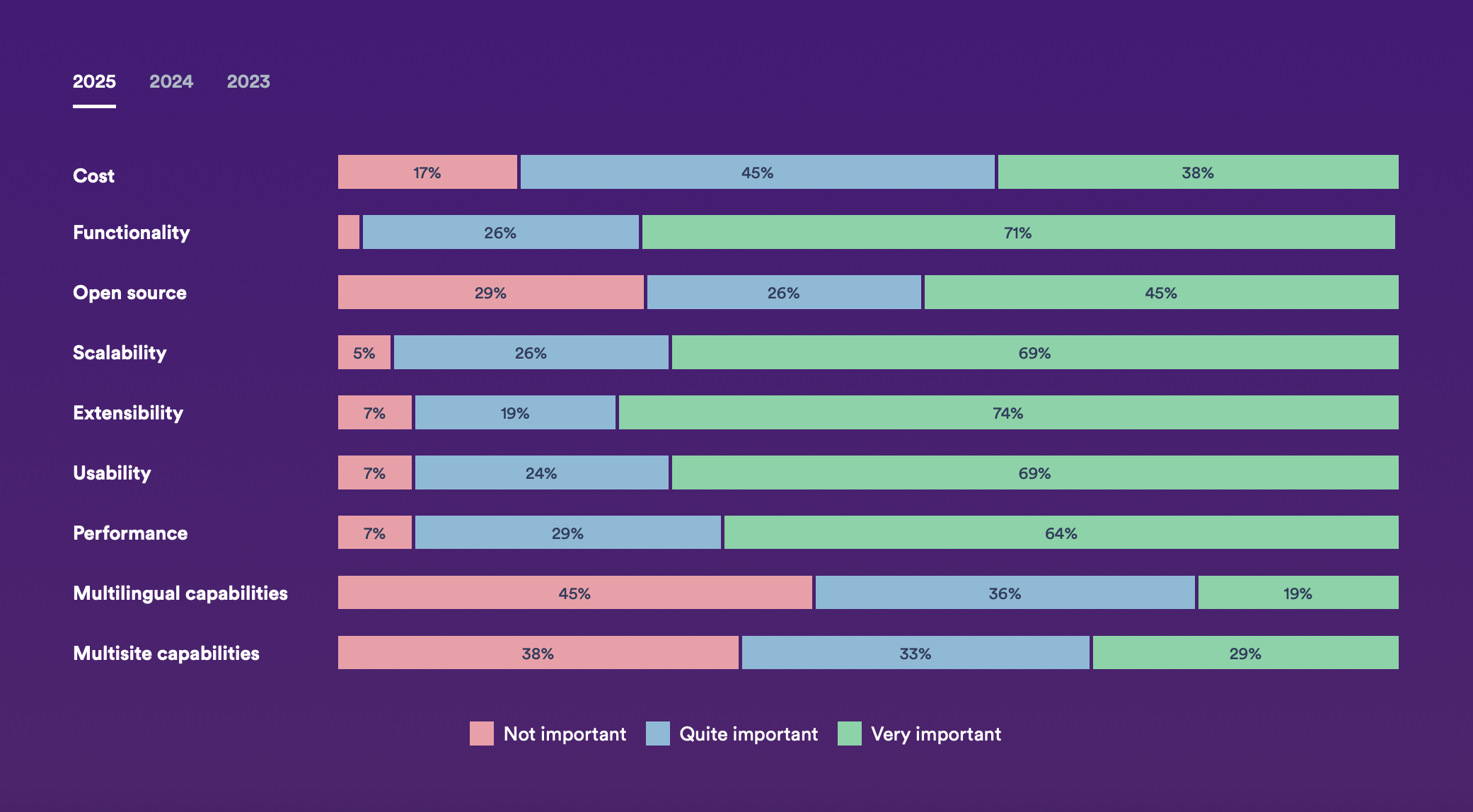
Functionality, scalability, usability, and extensibility are the strongest reasons organisations choose WordPress. These factors outrank cost by a wide margin. Senior leadership teams, including Boards and C level executives, are now more involved in CMS decisions. This shift signals a recognition that the CMS is not simply an operational tool. It is a strategic asset that influences speed to market, customer experience, and the ability to evolve digital products over time. WordPress is increasingly chosen for its adaptability and long term value rather than short term budget efficiency.
The 2025 report shows a platform that is scaling with enterprise needs and evolving through active industry participation. WordPress continues to offer a flexible foundation for organisations that want control of their digital futures. With rising investment in open source, stronger editorial workflows, and greater architectural choice, the enterprise WordPress ecosystem looks well positioned for another year of growth and innovation.